A satellite handset is insurance rather than a telephone. It is bought for the day the mobile
network is not there - a vessel out of coverage, a site after a storm, a convoy on a road with no
signal, a facility whose terrestrial link has failed. That determines what actually matters about
it: battery life, ruggedness, and the ability to raise help without a conversation.
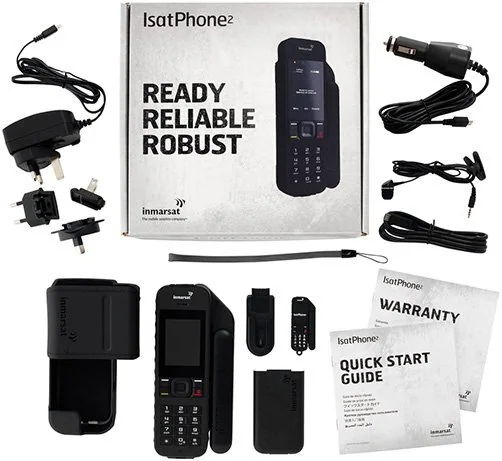
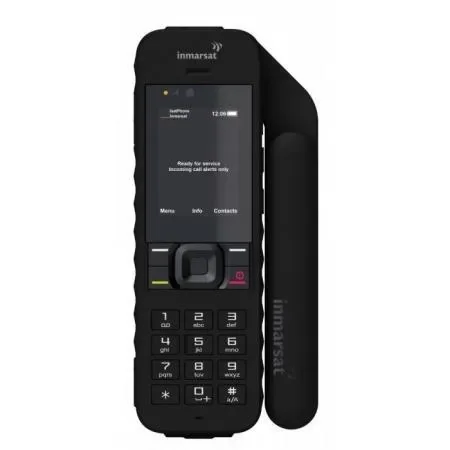
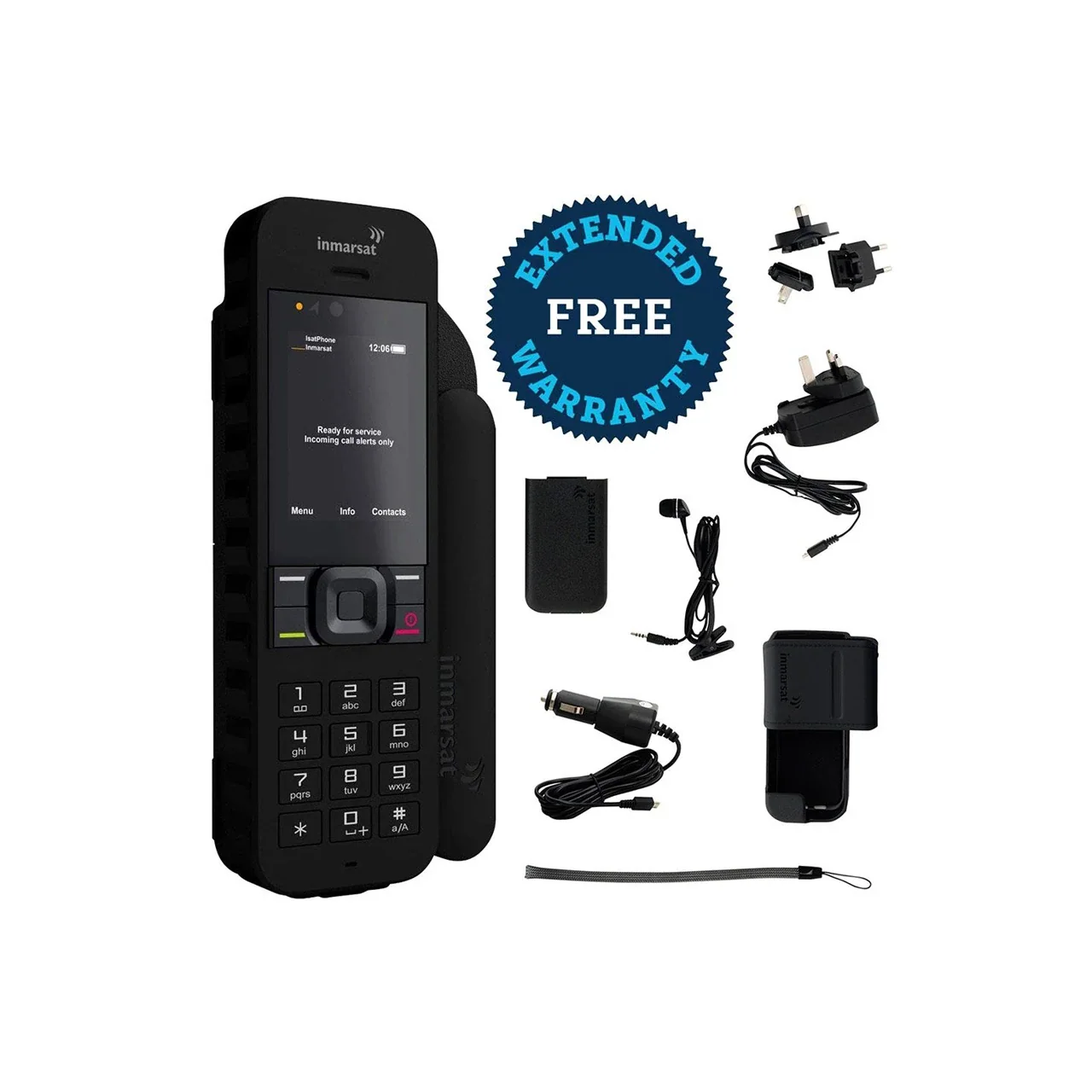
Battery life is the headline figure and the IsatPhone 2 is quoted at up to 8 hours of talk
time with 160 hours of standby, from a 3.7 V lithium-ion battery. Standby is the more important
of the two for the way these are used, because the phone spends almost all of its life switched
on in a drawer or a grab bag and needs to work when it is picked up. Nearly a week of standby is
the difference between a phone that is ready and one that is flat when it is needed.
The assistance button is the feature that justifies specifying this handset over a plain
satellite phone. Pressing it transmits a user-designed message together with the phone's GPS
coordinates to a pre-programmed emergency contact. Everything about that is designed for
someone who cannot manage a call: no number to remember, no explanation to give, no need to know
where you are. For a lone worker, a small boat, a survey party or a driver, it is a usable
alerting mechanism rather than a theoretical one - and because the message is composed in
advance, the recipient gets something actionable rather than an alarm.
Alongside it sit tracking, which reports position at intervals to a chosen recipient, and an
eCompass to help point the phone at the satellite. That last item sounds trivial and is not: a
geostationary satellite handset needs line of sight to a specific part of the sky, and in a
valley, among buildings or under structure the difference between a call and no call is where the
antenna is aimed. An on-screen compass turns that from guesswork into instruction.
The build is described as dust, shock and splash resistant with an operating range of -20 to
+55 degrees C, which suits a vehicle, a boat or a site rather than a laboratory. Practical
features round it out: a speakerphone, Bluetooth, microphone muting, an alarm, a minute minder
for cost control on metered airtime, and incoming call alerts with the antenna stowed - so the
phone can be carried closed and still tell you someone is calling.
Two points on procurement. Airtime is separate from the handset and is bought as a prepaid or
monthly plan; the plan, not the phone, determines what a call costs, and a phone with expired
airtime does not work at all - which is the most common way these fail in practice, so we set
out the airtime arrangement alongside the hardware. And Inmarsat is now part of Viasat, so
product pages and datasheets have moved: the figures above are consistent across independent
distributor datasheets, and we confirm them against the current manufacturer datasheet before
quoting.

 1 / 3
1 / 3