USB has a distance limit. The specification allows a few metres, and beyond that a passive
cable simply stops working - not gracefully, but with devices that appear and disappear or never
enumerate at all. In a meeting room that limit lands exactly where it is least convenient:
between the display, where the camera and the video bar are, and the table, where the
microphones, the touch console and the sharing hub need to be.
The usual improvisations are all bad. A long USB cable with an in-line repeater works until
it does not, and fails intermittently in a way that gets blamed on the software. Daisy-chained
extension cables are worse. Moving the peripherals to the display solves the electrical problem
and creates a usability one, because a microphone by the screen does not hear the table and a
console on the wall is not where anyone is sitting.
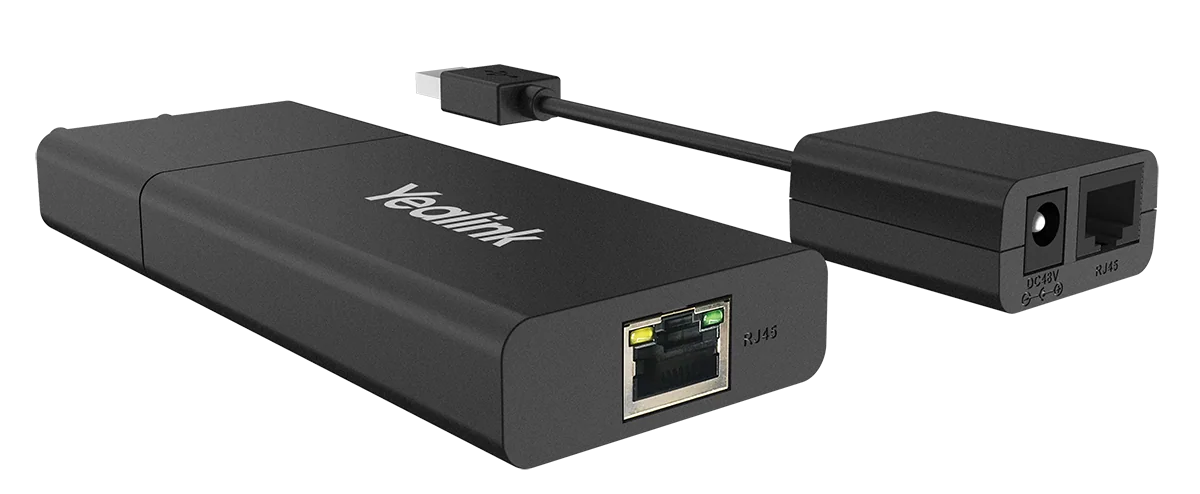
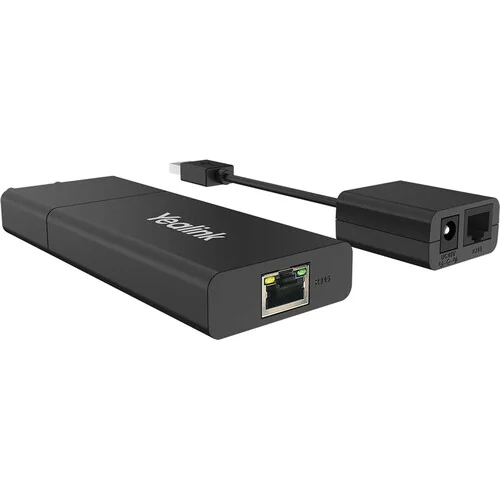
Extending USB over structured cabling solves it properly, and Yealink's own framing is the
best summary of why this product exists: one CAT5e is enough to connect the TV area to the
conference table area for data transmission and power supply, without additional power supply or
extension cables. Both halves of that matter. Data over CAT5e covers the distance reliably,
because the signalling is converted to something twisted-pair cable carries well. And power
travelling the same run means no socket is needed at the table end - which on a solid floor or a
table that people move is often harder to arrange than the data.
The practical benefit is that room layout stops being dictated by cable length. Peripherals
can go where they work best rather than where they will reach, and Yealink put it plainly: users
can place USB peripherals nearly anywhere in the meeting room.
The other advantage is that CAT5e is what the building already has. A structured cable run is
something any electrician or cabling contractor can install, terminate and test, and it can be
pulled through the same containment as everything else - through a floor box, up a table leg, or
along a cable tray. A specialist USB cable is a consumable that has to be ordered, is a fixed
length, and cannot be terminated on site. On a programme fitting out several rooms, that
difference decides the schedule.