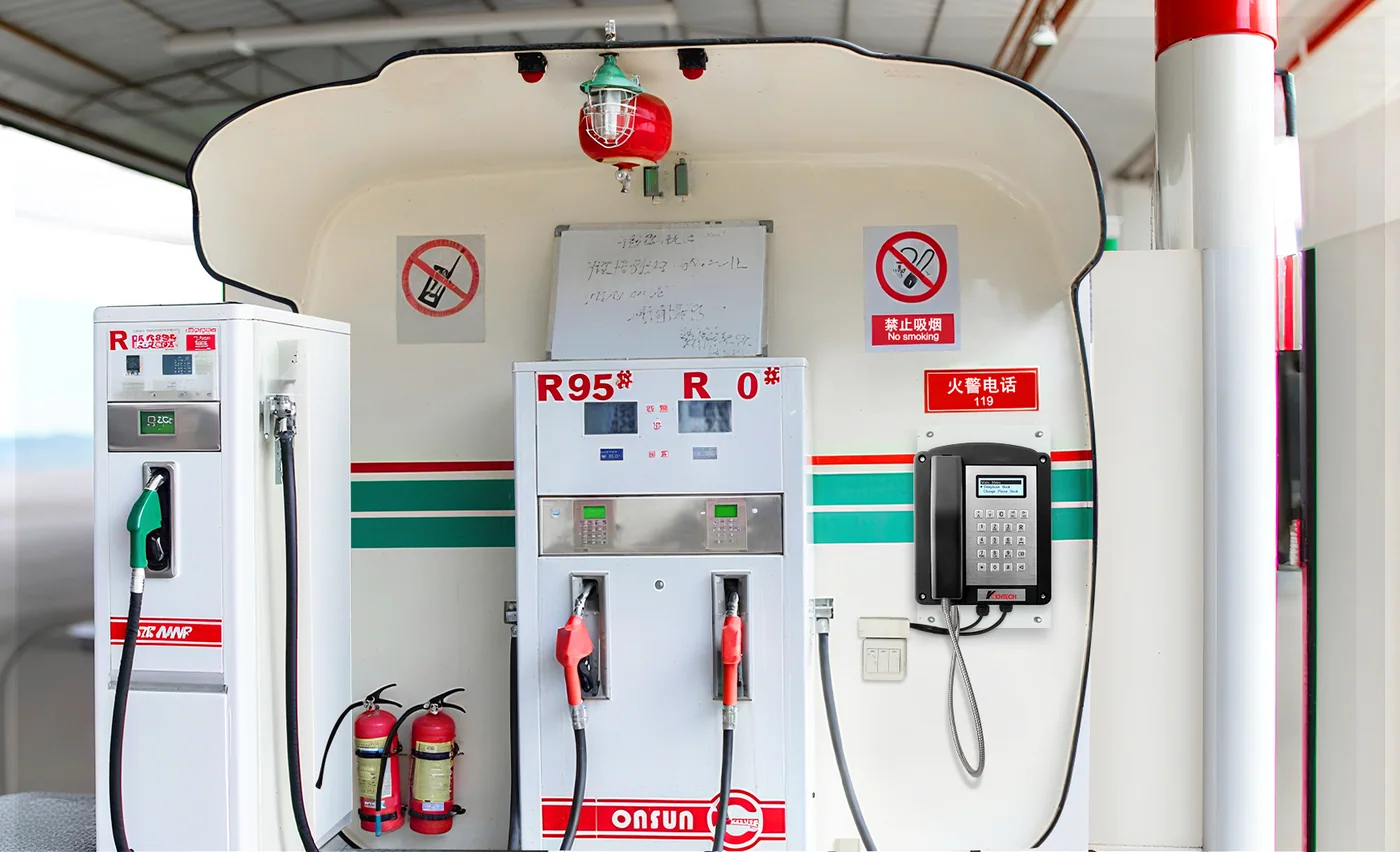
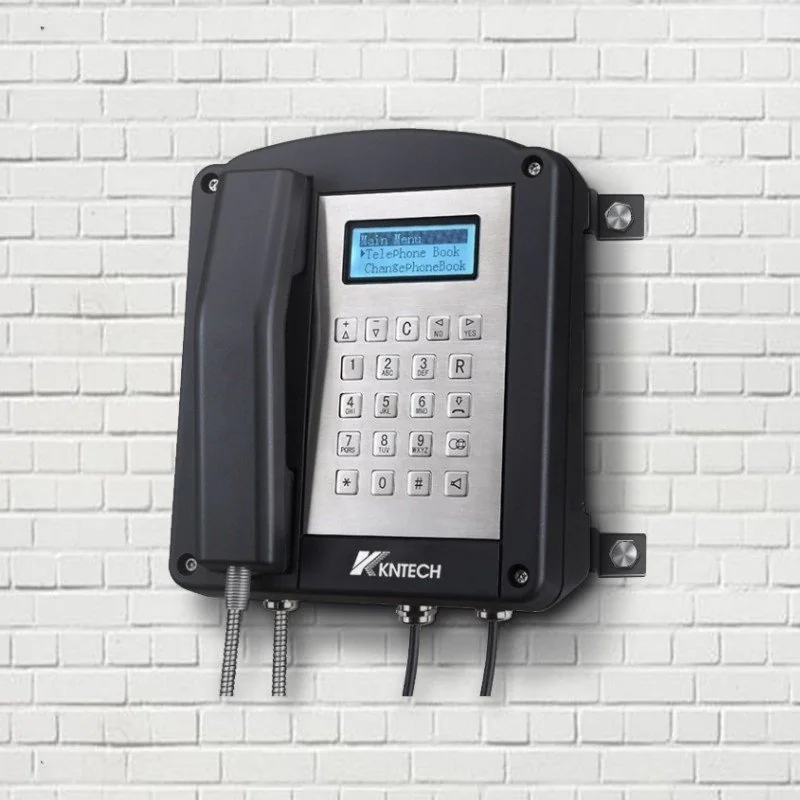
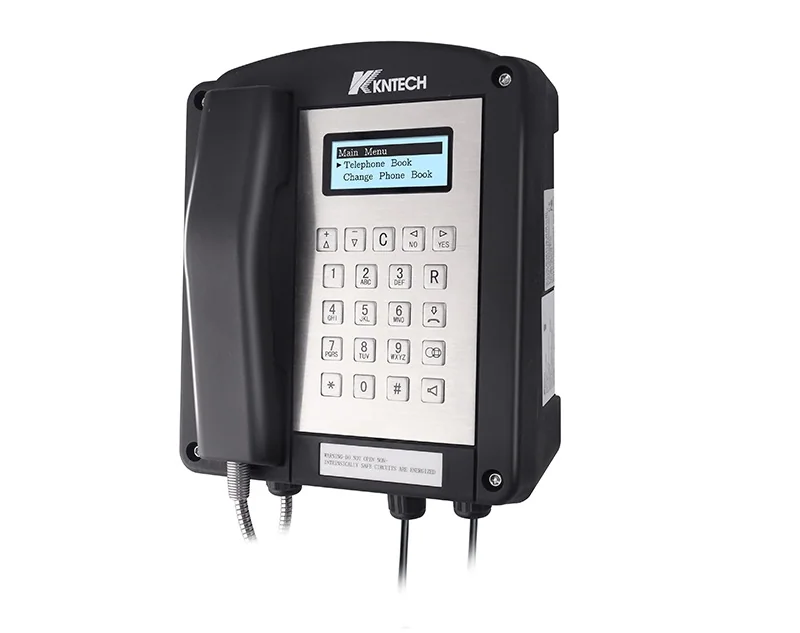
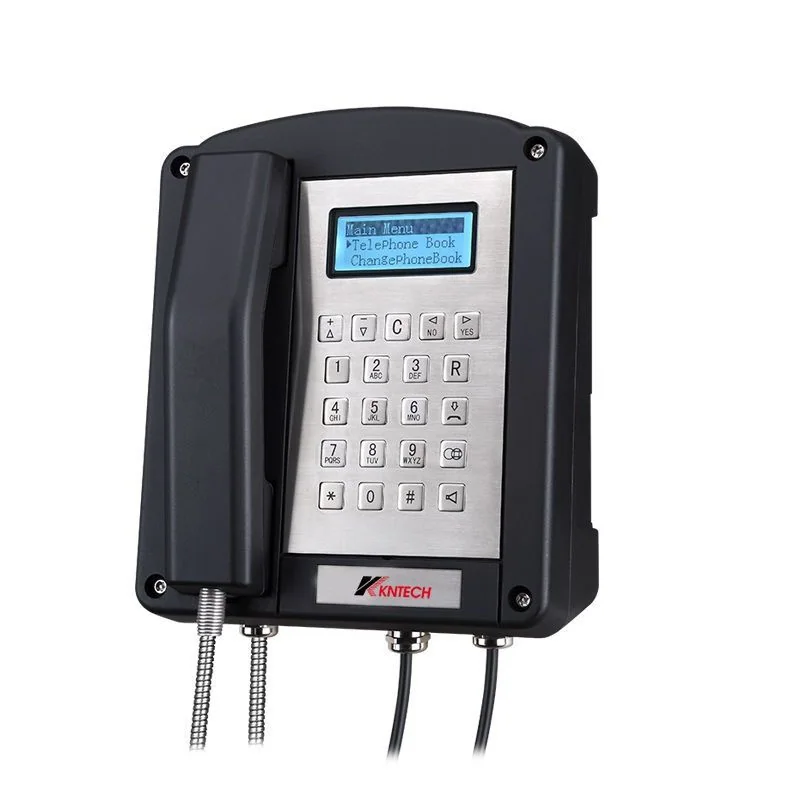
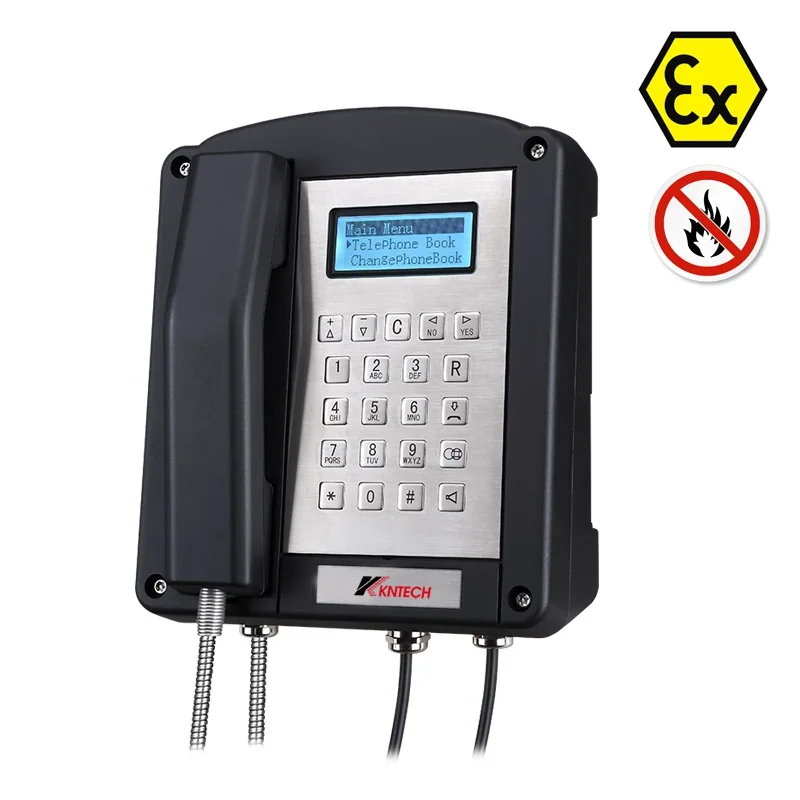
The most important thing about this telephone is that it needs no power. It is an analogue
set that runs from the telephone line itself - no external supply, no battery - and in a
hazardous area that is a significant simplification. Every power feed into a classified area
is a cable, a gland, a certified supply and a piece of paperwork. A telephone that arrives on
two wires and works removes all of it, and it also means the telephone keeps working when
site power does not, which is precisely when someone will want to use it.
The body is SMC - sheet moulding compound, a glassfibre-reinforced polyester, quoted as SMC
2600 - rather than metal. That is a deliberate choice for this class of product: it is
non-metallic, so corrosion is not a concern in salt or chemical atmospheres, and it is lighter
than a die-cast housing while still taking impact. KNTECH rate it IP66 for ingress and IK09
for impact, and the stainless steel armoured handset is specified to hold over 170 kg, which
is a blunt way of saying it survives being used as a handhold and being dropped from height on
its cord.
On certification, KNTECH state IECEx and give the marking as Zone 2, Ex e ib mb IIC T6 Gb,
while describing the wider range for Zone 1 and Zone 2 with Ex II 2 GD covering dust. Those
are different claims, and the certificate for the variant supplied is what governs - we
confirm it against your hazardous area classification before quoting rather than reading it
off a web page. Worth noting that the marking quoted is IIC, which is the widest gas group and
covers hydrogen and acetylene, and T6, the most restrictive temperature class.
The feature set is built around controlling who can call what, which is unusual and useful.
A full soft lock restricts the telephone to dialling only numbers held in its 50-entry phone
book; a half soft lock restricts it to numbers starting with a permitted prefix. On a plant
telephone that stops it becoming a free public phone while still allowing every operational
destination. There is a two-line alphanumeric LCD with four selectable backlight levels, a
programmable welcome message, busy tone detection to release the line automatically, ringing
at 95 dB in 1 m with ten selectable melodies, loudspeaker listening at 70 dB in 1 m, and
four-level adjustment of ring, hands-free and receiver volume.
The handset has a dynamic receiver with inductive coupling for hearing aids and an electret
noise-cancelling microphone. The keypad is flush-mounted stainless steel with 21 keys carrying
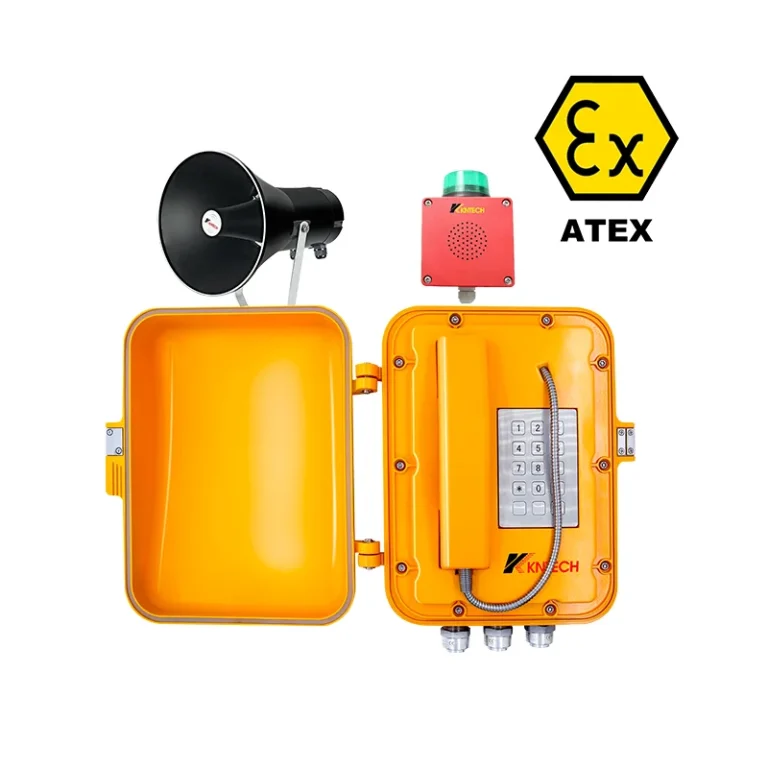
numbers and letters for programming. External functions provide for an additional loudspeaker,
an extra earpiece and a ring sounder, and a dry contact for external control automation is
available as an option. It matches most PABX, PBX and PAX systems, dials DTMF, weighs 5.8 kg,
and operates from -25 to 60 degrees C with storage down to -30 and up to +70.

 1 / 5
1 / 5