Jl. M.H. Thamrin Kav 3, Menara Thamrin, Level 3A, Jakarta 10250 +62-2139-8303-03 / +62 857 6344 7043 contact@vivoasia.com
Telephone Systems

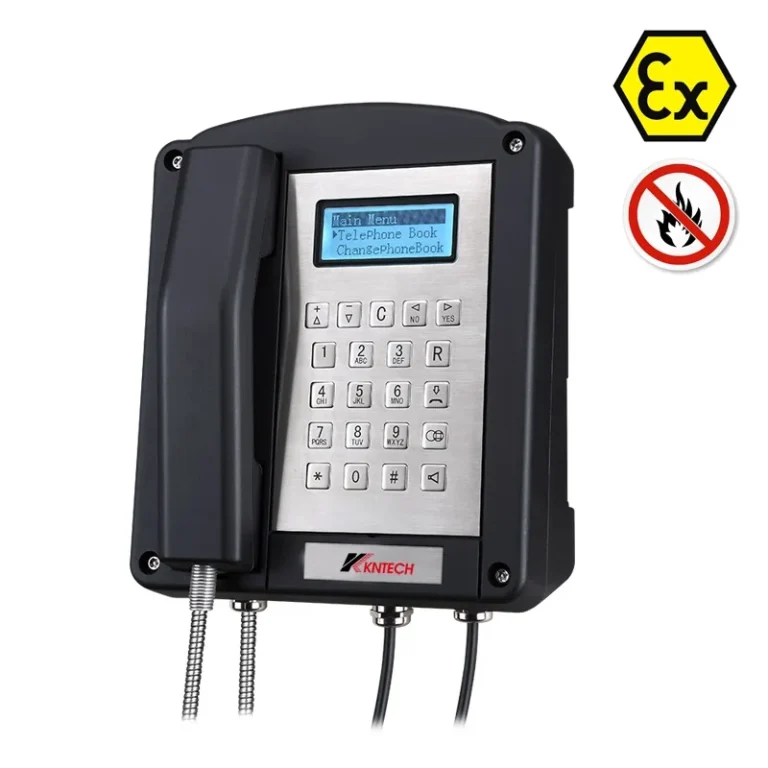
KNTECH KNEx6 Explosion Proof Telephone

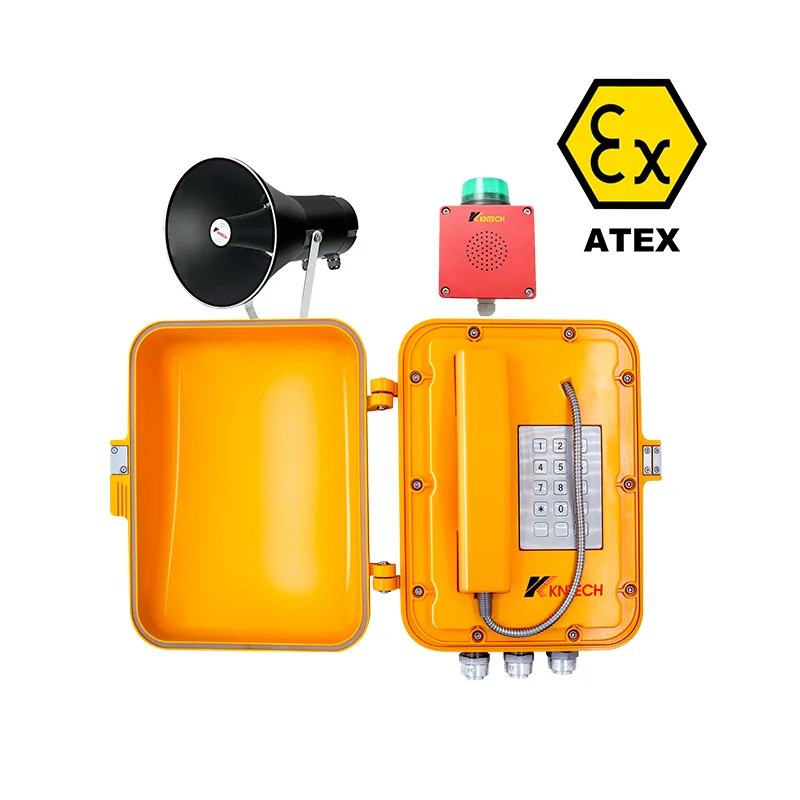
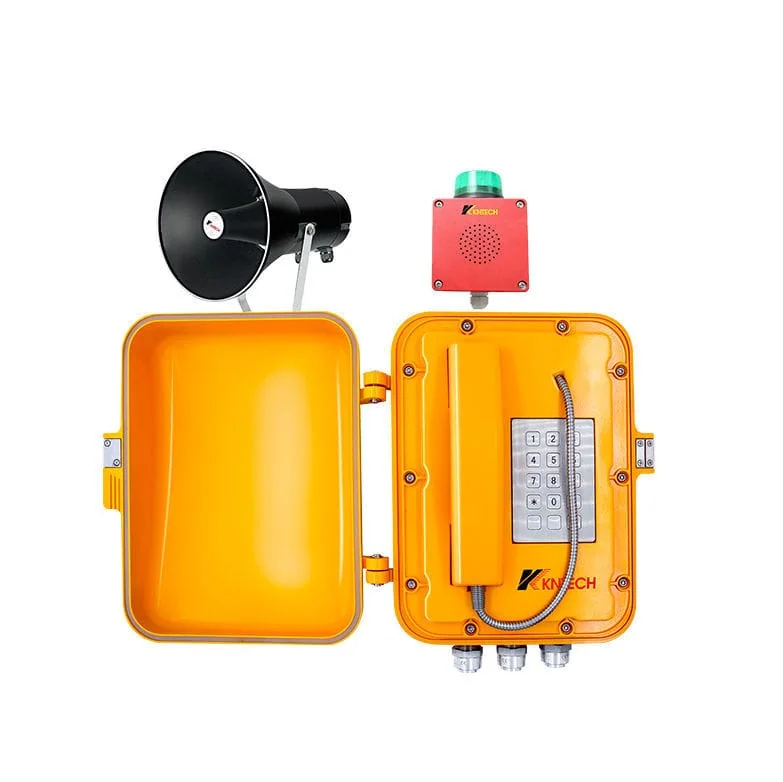
ATEX telephone with built-in sounder and flashing light, driving an Ex horn up to 30 W.

The KNTECH KNEx6 is an ATEX-certified analogue explosion-proof telephone with a built-in 8 ohm sounder and flashing light, able to drive an external explosion-proof horn of 8 ohms and 5 to 30 W. Its protection type is II 2G Ex db ib IIB T5 Gb, rated -20 to 55 degrees C.

  • II 2G Ex db ib IIB T5 Gb, for Zone 1 and Zone 2
  • Built-in sounder and flash light, drives an Ex horn to 30 W
  • Ringing over 100 dB(A) at 50 cm
SPECIFICATIONS
Model KNEx6 Analogue
Protection II 2G Ex db ib IIB T5 Gb, -20 to 55 C
Body Die-cast aluminium alloy, 345 x 262 x 161 mm, 10.65 kg
Ingress IP66
Audio out Built-in 8 ohm 0.5 W; supports 8 ohm 5-30 W Ex horn

Description

The problem this telephone solves is not being able to hear the telephone. In a refinery, a compressor house or a process area, a ringing telephone is inaudible, so calls are missed - and on a hazardous site the call being missed may be the one that mattered. The KNEx6 deals with it by being loud and by being visible: ringing is quoted at over 100 dB(A) at 50 cm, there is a built-in 8 ohm 0.5 W sounder with a flash light, and it supports connection of an external explosion-proof horn of 8 ohms rated from 5 to 30 W for areas where even that is not enough.

That external horn connection is the feature that distinguishes this from an ordinary Ex telephone. It means one certified telephone can serve a genuinely loud area, with the horn mounted where it will be heard rather than being limited to whatever fits on the telephone itself. The interface provides for the handset, a D20 ringtone at 8 ohm 0.5 W, an LED at 5 V DC 0.75 W, and the explosion-proof horn, on an optional eight-core cable.

On certification, the stated protection type is II 2G Ex db ib IIB T5 Gb with a temperature range of -20 to 55 degrees C, and KNTECH describe the range for use in Zone 1 and Zone 2, with Ex II 2 GD covering dust as well as gas. The combination of db - flameproof enclosure - with ib - intrinsically safe circuits - is a common and sensible arrangement for a telephone: the enclosure contains any incident while the circuits themselves are energy-limited. IIB is a gas group, and it is worth checking against your area classification, because IIB does not cover IIC gases such as hydrogen and acetylene. We confirm the marking on the certificate for the variant supplied against your classification drawing before quoting.

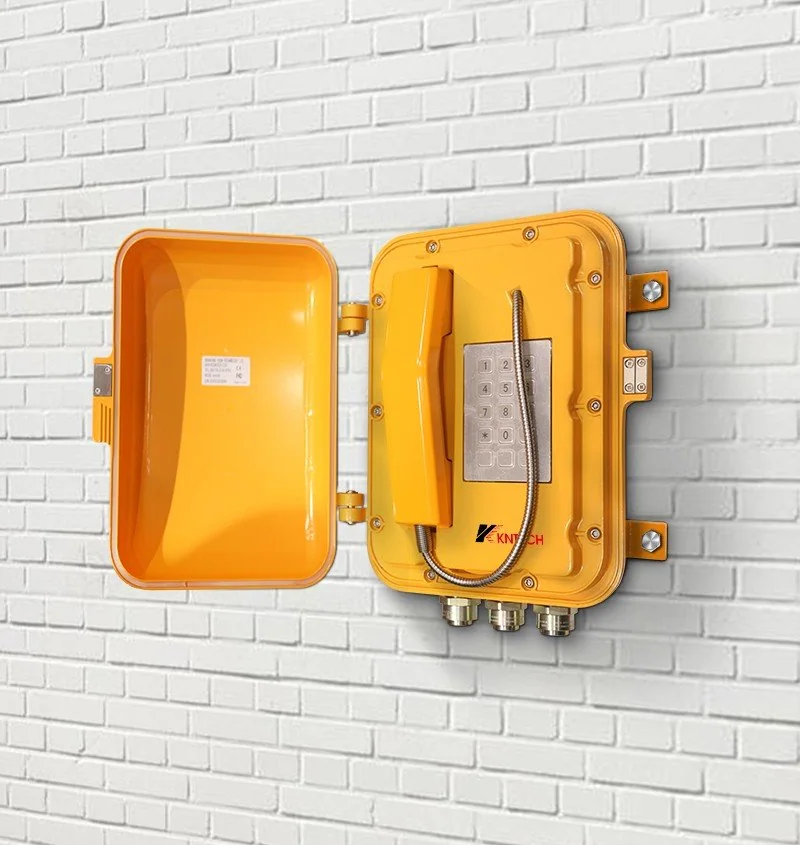
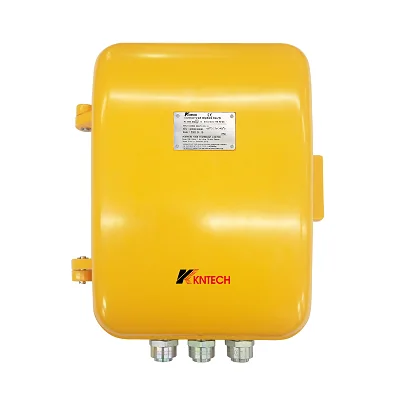
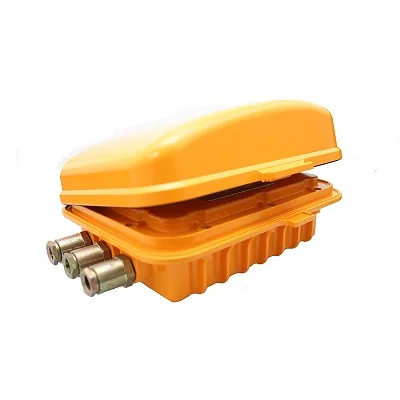
Mechanically it is a substantial object - die-cast aluminium alloy, 345 x 262 x 161 mm and 10.65 kg without the speaker and light, IP66, powder coated in UV-stabilised polyester, with vandal and tamper-resistant hardware and a self-closing door cover. The keypad is stainless steel, waterproof and dustproof, the hook-switch is a magnetic reed type, and the heavy-duty handset has a hearing-aid compatible receiver and a noise-cancelling microphone on an industrial curly cord. It runs from AC 110 V or AC 220 V, dials DTMF, stores ten speed-dial groups, and KNTECH quote MTBF at 100,000 hours.

KNEx6 sits in a family, and the alternatives are worth knowing: KNEx5 is another analogue Ex telephone, KNEx7 is an IP version and KNEx8 is VoIP. Where a site is standardising on IP telephony, those are the ones to look at rather than adding analogue infrastructure for the hazardous areas alone.

Features

  • II 2G Ex db ib IIB T5 Gb. Flameproof enclosure with intrinsically safe circuits, rated -20 to 55 degrees C, for Zone 1 and Zone 2.
  • Heard over the plant. Ringing above 100 dB(A) at 50 cm, plus a built-in sounder and flash light.
  • Drives an external Ex horn. 8 ohm, 5 to 30 W, so one telephone can serve a genuinely loud area.
  • Visual alerting. Flash light for anyone in hearing protection.
  • Die-cast aluminium, IP66. 10.65 kg, vandal and tamper-resistant, with a self-closing door cover.
  • Stainless steel keypad and reed hook-switch. The two parts that fail first, built not to.
  • Ten speed-dial groups. Control room, security and muster point as single entries.
  • IP and VoIP siblings. KNEx7 and KNEx8 where the site is standardising on IP.

Applications

KNTECH's stated applications, which read as a list of classified areas.

  • Petrochemical plant. Process units and loading areas.
  • Hazardous dust and gas atmospheres. Including Zone 22 dust areas.
  • Offshore and marine. Ships, platforms and terminals.
  • Mines. Where noise and dust arrive together.
  • Power plants. Including the nuclear dispatch application KNTECH cite.
  • Tunnels, metro, railway and bridges. Where the same ruggedness applies without the gas hazard.

Support & Documents

PT Vivo Asia Teknologi Indonesia supplies industrial telephony as a designed and commissioned system rather than as a boxed item. Our scope typically covers:

  • Station schedule and area classification review for every proposed location.
  • Selection of indoor, weatherproof or explosion-proof stations to suit each area.
  • Exchange, cabling and power design, including line monitoring where required.
  • Supply, installation, termination and commissioning.
  • Integration with PAGA, fire and gas, and any existing PABX or IP telephony.
  • Audibility checks in noisy areas, and ongoing maintenance and spares.

Ratings, approvals and electrical details vary by variant and are confirmed against the current manufacturer datasheet at quotation stage. Send us your station schedule and the hazardous-area classification for each location, and we will come back with the right variants and a full bill of materials.

Use the enquiry button above for a datasheet, a specification or a project quotation.

Related products