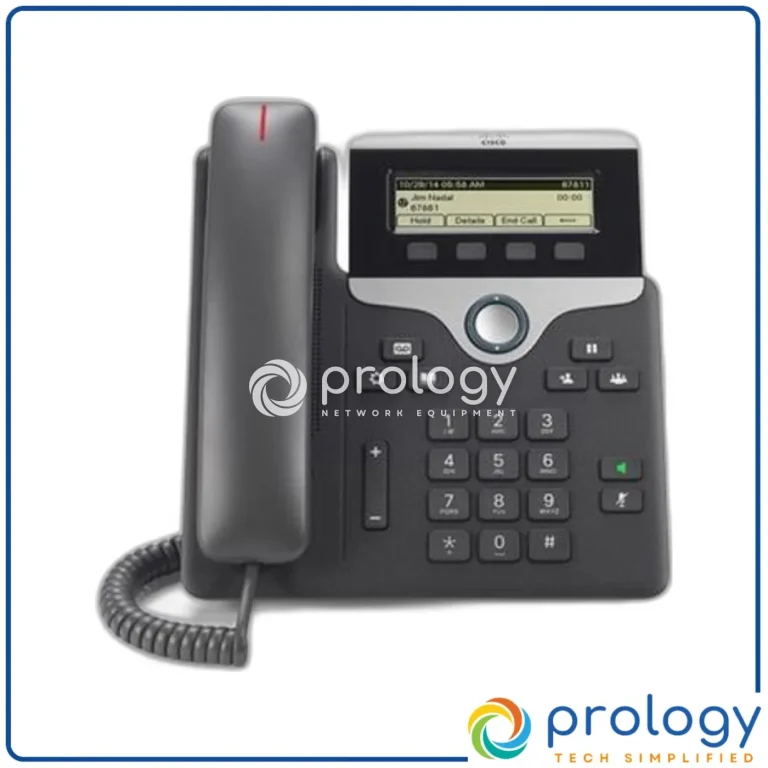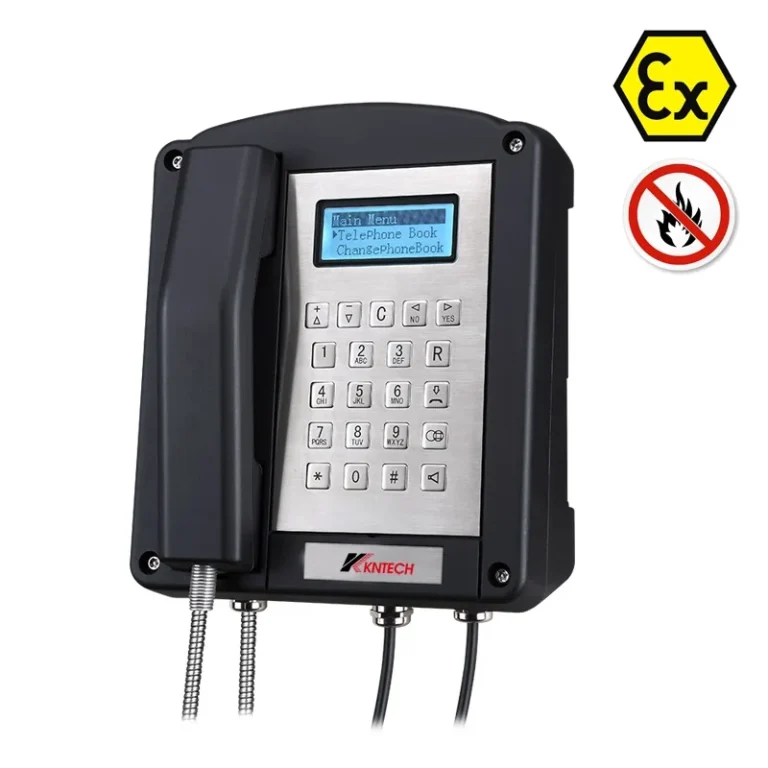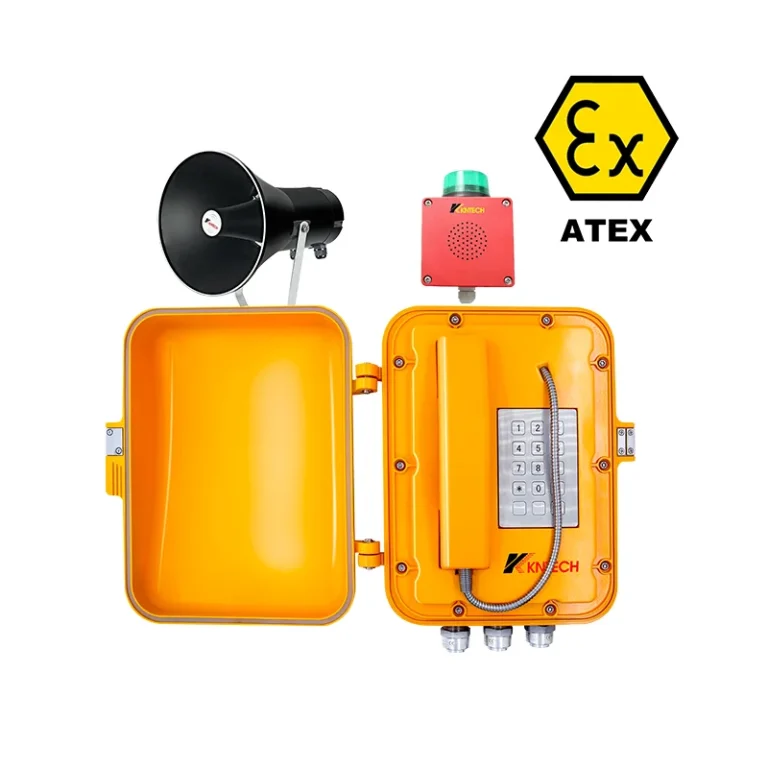
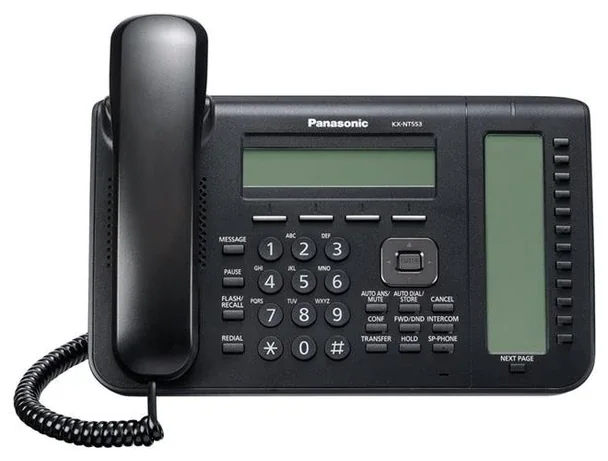
Every industrial site has an office half. Administration, procurement, HR, the site
manager's desk and reception need ordinary business telephony - extensions, hunt groups, voice
mail, an auto attendant, outside lines - and they need it to be cheap to run and easy for
somebody on site to administer. That is a different requirement from the hardened telephones
in the plant, and it is the requirement Panasonic's business communication systems address.
The characteristic of these platforms is that they are hybrid. A single system carries
analogue extensions, Panasonic digital extensions and IP extensions at the same time, and
takes outside lines as SIP trunks, ISDN or analogue lines. That matters most on a site that
already has something installed. Rather than replacing every telephone and every line to move
to IP, a hybrid platform lets the existing analogue sets in the workshop stay where they are
while new positions go in as IP, and the migration happens at whatever pace the budget allows.
Panasonic's platforms also accept third-party SIP hardphones and softphones alongside their own
handsets, so a site is not locked to one handset supplier for the life of the system.
Where Panasonic historically fit well is the middle of the market - sites that need real PBX
features and multi-site networking but not an enterprise-scale deployment, and that want the
system administered locally rather than through a service contract. On a facility in Indonesia
with a head office and one or two remote sites, that is usually the right shape.
One thing we will be straight about: Panasonic have discontinued production of parts of
this range, including the KX-NS1000, and their business communication portfolio has changed
considerably. We therefore do not quote a model here from a specification sheet that may no
longer describe something you can buy. Tell us the number of extensions, how many outside
lines and of what type, whether the site needs to network to other offices, and what is
installed now, and we will come back with a current platform, a supported handset range and a
sensible migration path - Panasonic where it is the right answer, and something else where it
is not.