Jl. M.H. Thamrin Kav 3, Menara Thamrin, Level 3A, Jakarta 10250 +62-2139-8303-03 / +62 857 6344 7043 contact@vivoasia.com
Marine Cables 1 / 2
General Items

Marine Cables

Cable and certified entry hardware for marine installations, specified to the rules.

Cable and cable-entry hardware for marine and naval installations. The Eaton Capri BVL and BVP marine gland ranges are built to DTCN 5975 CA, take non-armoured and steel wire braided armoured cable, and are available in natural brass or polyamide with an IP54 rating.

  • Capri BVL / BVP marine glands to DTCN 5975 CA standards
  • Accept non-armoured and steel wire braided armoured cable
  • Brass or polyamide, IP54, two operating temperature ranges
SPECIFICATIONS
Gland ranges Capri BVL and BVP, marine and naval
Standard DTCN 5975 CA
Cable types accepted Non-armoured, steel wire braided armoured
Materials Natural brass or polyamide, by model
Protection IP54, with two operating temperature ranges

Description

A marine cable installation is only as good as the point where the cable enters something. The cable itself can be perfectly specified, correctly routed and properly supported, and the installation will still fail at the gland - because that is where water gets in, where the armour has to be terminated and earthed, and where the mechanical load of a cable being pulled or flexed is actually taken.

Eaton's Capri BVL and BVP ranges are purpose-made for that job in marine and naval service, built to DTCN 5975 CA standards. They accept both non-armoured cable and steel wire braided armoured cable, which matters because the two need entirely different treatment: an armoured cable's braid has to be clamped and bonded so it carries fault current and provides mechanical restraint, and a gland that only accommodates plain cable cannot do that. Depending on the model they are made in natural brass or polyamide, accommodate a locknut, and achieve an IP54 rating along with what Eaton describe as a perfect tensile strength. Two operating temperature ranges are offered across the ranges to suit different cable entry requirements.

The brass and polyamide choice is worth making deliberately. Brass is the traditional marine material, mechanically strong and able to take a firm armour clamp; polyamide is non-metallic, lighter, and does not enter into galvanic corrosion with the structure it is bolted to - which on an aluminium superstructure or in a permanently wet space is a real consideration rather than a theoretical one.

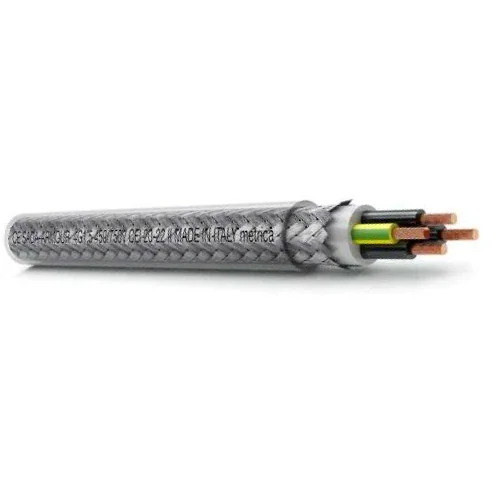
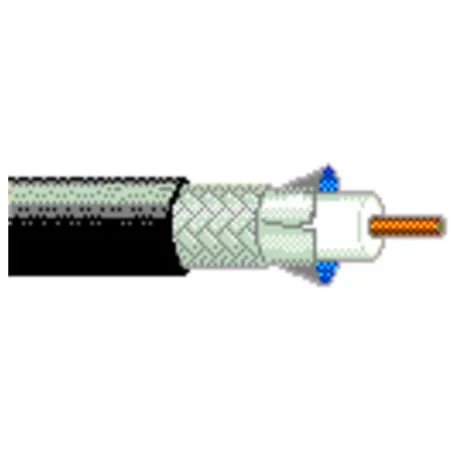
On the cable itself, we specify against the project rather than offering a single part. Cable for shipboard and offshore use is type-approved by classification societies, and a surveyor will look for that approval against the drawings - so the type, the fire performance (flame retardant, and low smoke halogen free where the specification calls for it), the screening and the armour all follow from the rules the installation is being built to and the electrical environment it sits in. We supply to your cable schedule with the certificates, rather than quoting a type and hoping it satisfies the survey.

The details that decide whether a run behaves are settled at design stage: length and volt drop, bend radii, segregation from power circuits, and the gland and termination detail at each end. Getting those right is what avoids the intermittent faults that are unpleasant to trace once everything is closed up and painted.

Features

  • Built to DTCN 5975 CA. A marine and naval cable management standard, not a general industrial gland adapted to it.
  • Handles armoured and non-armoured. Steel wire braided armour clamped and bonded properly, as well as plain cable.
  • Brass or polyamide. Mechanical strength where it is needed, or a non-metallic gland where galvanic corrosion is the concern.
  • IP54 with stated tensile strength. Sealed and mechanically retained, with a locknut accommodated.
  • Two temperature ranges. So the gland matches the space it is installed in.
  • Cable specified to the project. Type approval, fire performance, screening and armour taken from the rules the installation is signed off to.
  • Certificates supplied. With the delivery, for the surveyor rather than after the fact.

Applications

Cable and entry hardware wherever marine rules apply.

  • Vessels and FPSOs. Deck, accommodation and machinery-space runs.
  • Naval vessels. Which is what the DTCN standard is written for.
  • Fixed offshore platforms. Between modules and along walkways.
  • Jetties and marine terminals. Exposed runs in constant salt.
  • Shipyards and refits. System replacements that must satisfy the original approvals.
  • Wet and wash-down spaces. Where a non-metallic gland avoids galvanic problems.

Support & Documents

PT Vivo Asia Teknologi Indonesia supplies the balance-of-plant items that a system needs alongside its headline equipment, and installs them as part of the same scope. Our involvement typically covers:

  • Selection against the specification, the area classification and the installation method.
  • Sizing and schedule preparation, working from your drawings or ours.
  • Supply from stocked or sourced product, with documentation and certificates.
  • Installation, termination and testing as part of the wider system.
  • Spares provisioning and ongoing maintenance.

Types, ratings and approvals vary by item and are confirmed at quotation stage against the manufacturer's current data. Send us the specification or the schedule and we will come back with a compliant offer and a full bill of materials.

Use the enquiry button above for a datasheet, a specification or a project quotation.

Related products