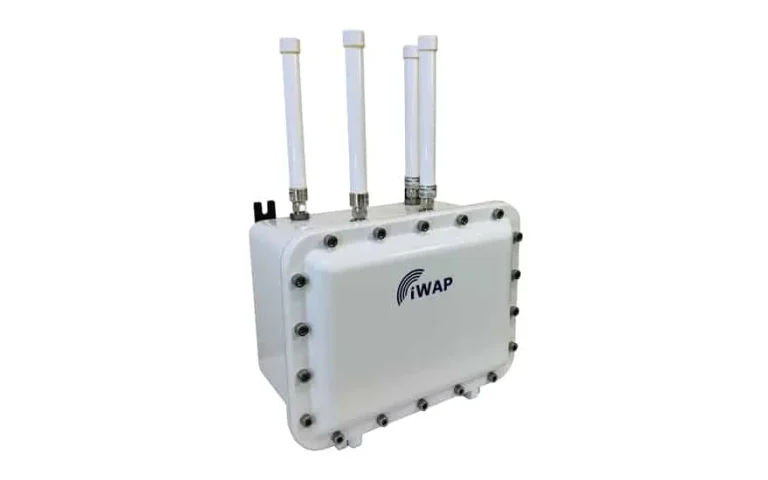
Enterprise access points are controller-based: the access point handles radio and client
traffic, while a controller holds the configuration, manages the radio environment across the
whole estate, applies policy, and handles roaming so a client moving between access points does
not drop its session. The controller is therefore a single point of design importance - and
potentially of failure - which is why its specification is about resilience and interfaces as
much as capacity.
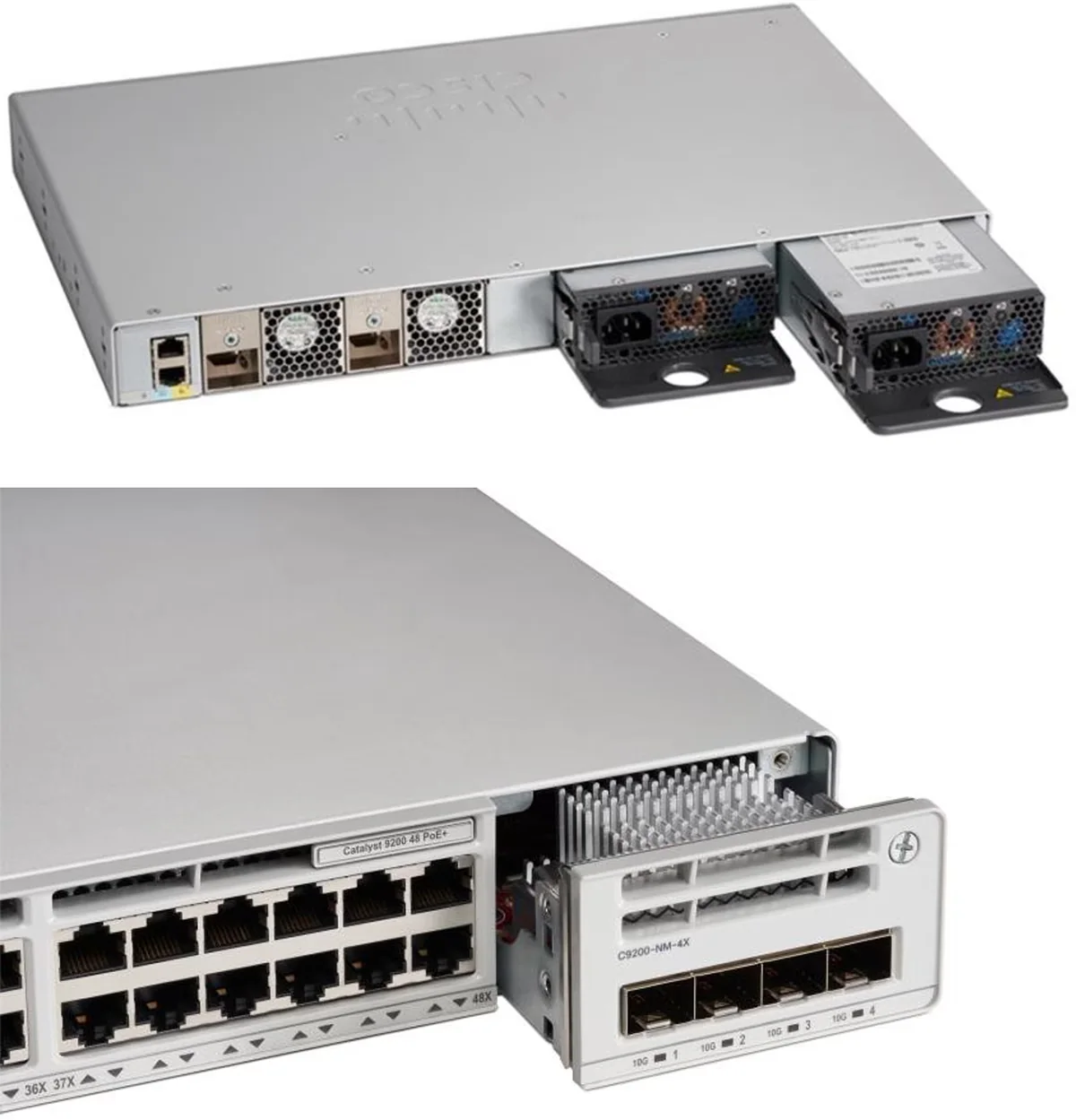
The Catalyst 9800-L is the fixed-configuration model in the 9800 family, positioned by Cisco
for small and midsize enterprises. Built from the ground up for intent-based networking, it
brings together Cisco IOS XE Software and Cisco's RF expertise, and Cisco emphasise seamless
software updates - which matters more than it sounds, because upgrading a controller means
touching every access point behind it, and an upgrade that can be staged without an outage is
the difference between a planned evening and a weekend.
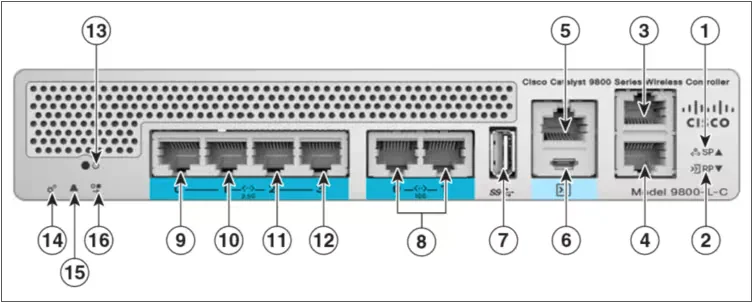
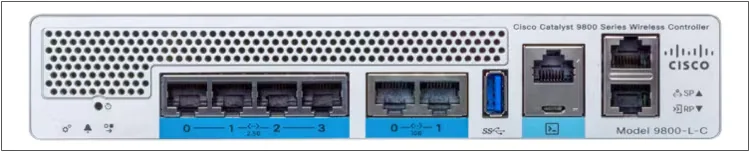
The C in C9800-L-C-K9 is the interface choice and it is worth getting right at order, since
it is fixed. This variant provides two 10G Multigigabit copper ports; the F variant provides the
same two ports as fiber. Copper is the correct choice where the controller sits in the same room
or building as its aggregation switch, which is the usual case - it avoids transceivers
altogether and uses structured cabling already in place. Fiber is for a longer run or where the
data centre standard demands it. Alongside those uplinks are four RJ-45 2.5G/1G Multigigabit
Ethernet data ports, which can operate at either speed.
Two front-panel ports are easy to overlook and both are worth using. There is a dedicated
redundancy port, which is what pairs two controllers for high availability - the mechanism that
keeps wireless service running through a controller failure or a software upgrade, and the
reason to consider buying two. And there is a separate RJ-45 service port for out-of-band
management, so the controller can be reached for administration on a path independent of the
network it is serving. When a wireless problem is also a network problem, in-band management is
exactly what stops working.
For local access there is an RJ-45 console port, a micro-B USB console and a USB 3.0 port,
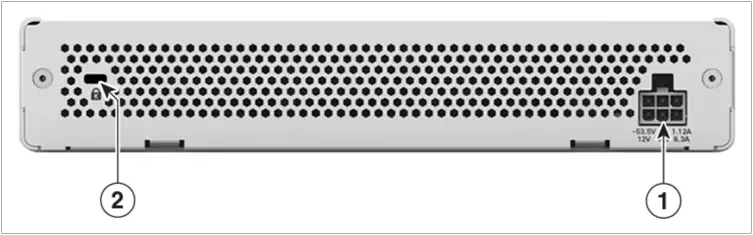
plus system, alarm and high-availability LEDs on the front panel. It ships with a single-output
12 V DC 110 W adapter, part number C9800-AC-110W, supplied by default. Sizing - how many access
points and clients a given configuration supports, and which licence tier is required - depends
on the software release and the AP count, so we confirm it against your access point schedule at
quotation rather than quoting a figure that a later release changes.

 1 / 3
1 / 3