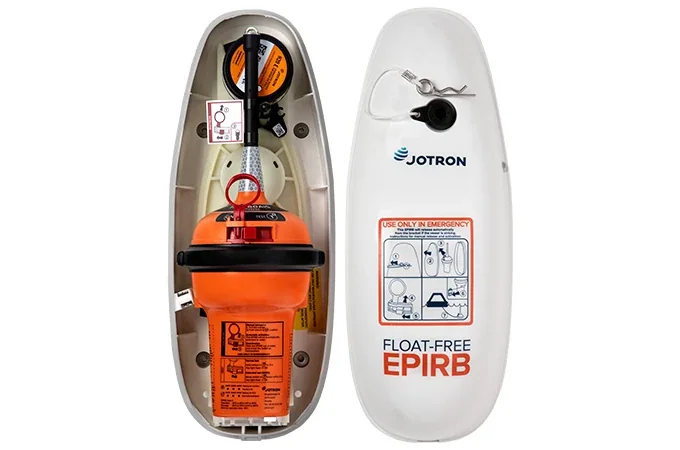
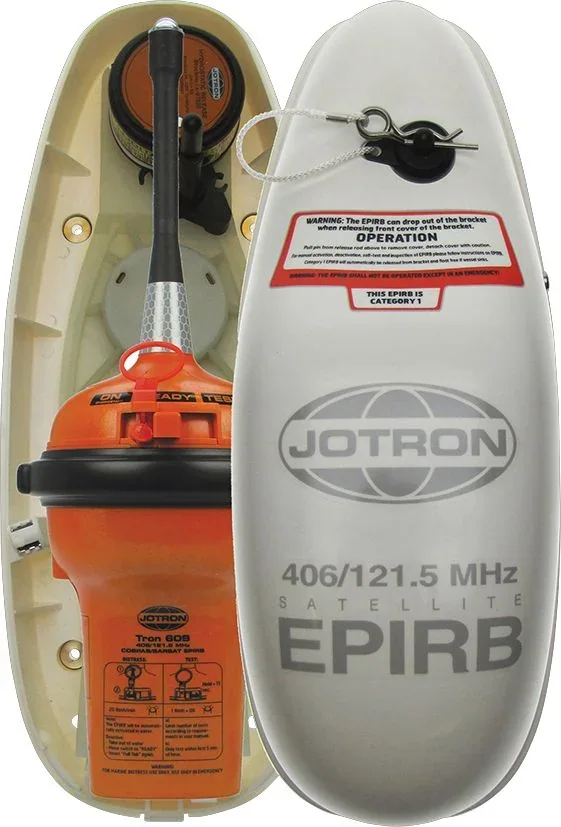
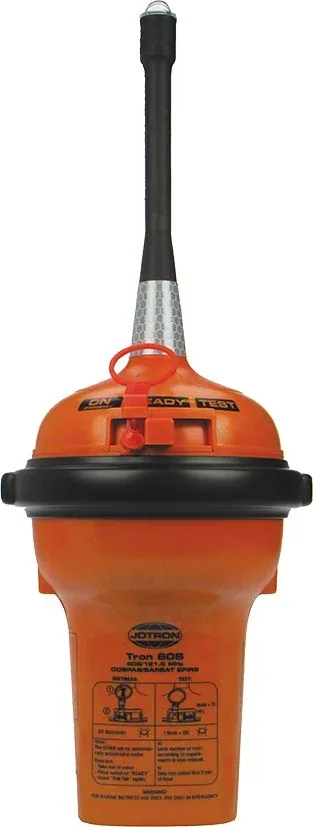
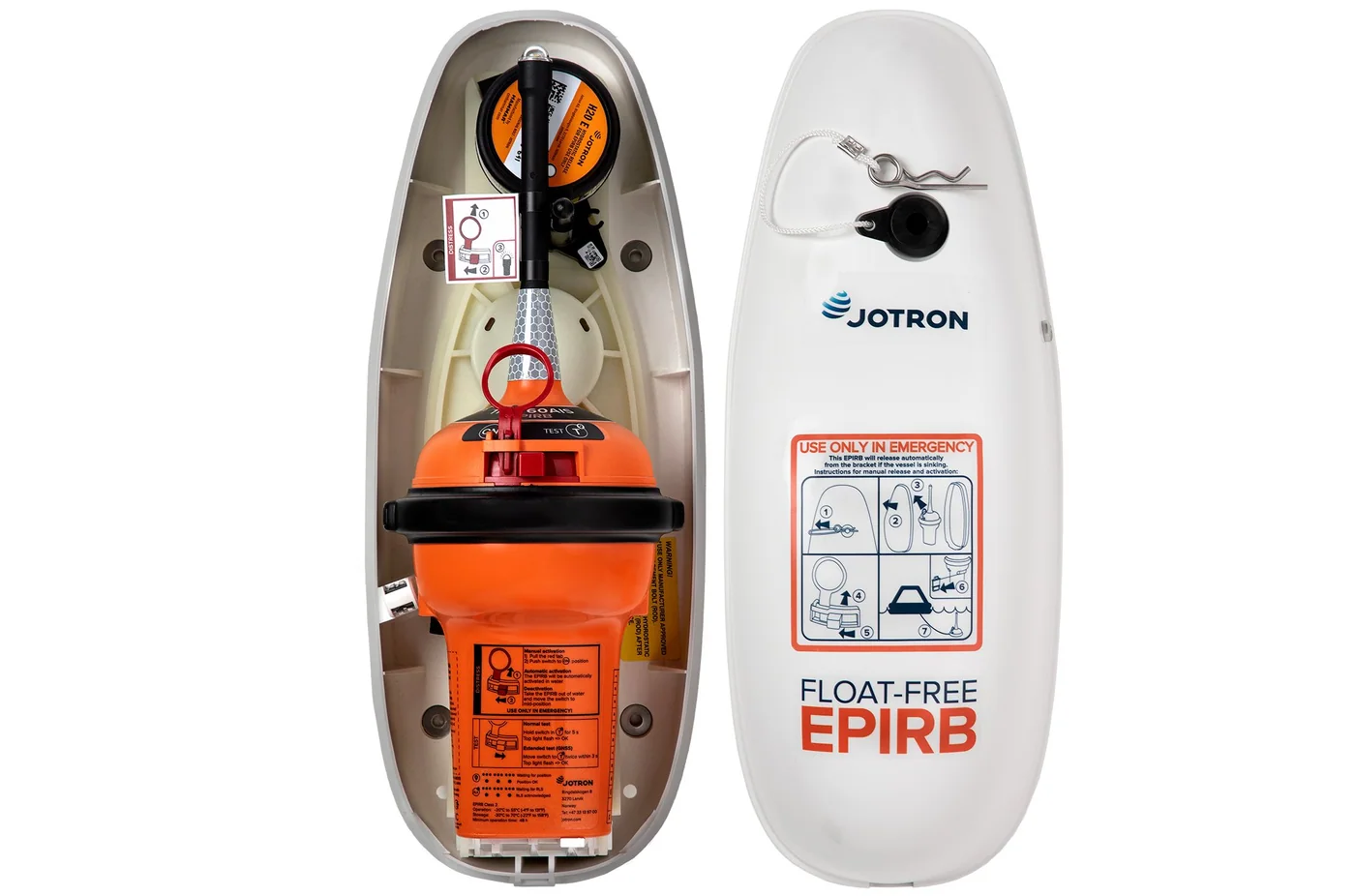
The Jotron Tron 60AIS, a float-free EPIRB with AIS homing and an IR LED for night SAR.
The Jotron Tron 60AIS (part 103170) is an EPIRB that transmits on the Cospas-Sarsat satellite system and also broadcasts AIS for homing, with an infrared LED for night-vision-assisted search and rescue.
Satellite distress alerting through Cospas-Sarsat, with AIS homing for faster localisation
IR LED alongside the regular LED, for night-vision-device SAR
NFC status readout via smartphone; 11 year 3 month total battery lifetime
ExtrasIR LED for night SAR, Galileo Return Link System, NFC status readout
Battery lifetime11 years, 3 months total
Description
An EPIRB is the last link in a distress chain. When it is activated it transmits on the
Cospas-Sarsat frequency, satellites relay the alert to a mission control centre, and the
beacon's registered identity tells the rescue authorities which vessel is in trouble and who
to contact. The Tron 60AIS is the float-free variant (part 103170): it sits in the FB-60
bracket, and if the vessel sinks the bracket's hydrostatic release frees the beacon so it
floats clear and activates without anyone doing anything - the case the SOLAS regulation is
really written for.
On top of the satellite route it also transmits AIS, with AIS homing technology built in,
so vessels within VHF range see the casualty directly on their own plotter rather than
waiting on the satellite-to-mission-control chain. It adds an infrared LED alongside the
regular strobe, specifically so night-vision goggles used by SAR aircraft and vessels can
pick it up in the dark, and it supports the Galileo Return Link System so the person in
distress gets confirmation their alert was received.
It is tested to IEC 61097-2 Ed.4 (April 2021) and carries MED, MER (UK), FCC, CCS,
ANATEL and IC approval. Day to day, its NFC chip lets anyone check its status with a
smartphone tap, while an exclusive app is available to authorised service partners for
configuration. The battery is rated for an 11-year, 3-month total lifetime, after which -
like the hydrostatic release - it is a dated, surveyed replacement rather than a discretionary
one.
Features
Satellite distress alerting. Transmits through Cospas-Sarsat to the
rescue coordination system.
AIS homing. Puts the casualty on the AIS display of vessels in range and
gives rescuers a homing signal, often the fastest route to a rescue.
IR LED. A dedicated infrared light for night-vision-assisted search and
rescue, alongside the regular LED.
Galileo Return Link System. Confirms to the casualty that the alert has
been received.
Float-free deployment. FB-60 bracket with hydrostatic release for
automatic activation if the vessel sinks.
NFC status readout. Status checked with a smartphone tap; configuration
via app is reserved to authorised partners.
11 year 3 month battery lifetime. A dated, surveyed replacement item.
Applications
SOLAS and commercial vessels. Carriage as required by class and area
of operation.
Fishing and workboats. Where the nearest help is usually another
vessel.
Offshore support and standby vessels. Field operations.
Survey remediation. Replacing beacons that have reached the end of
their battery or release life.
Fleet renewal. Standardising beacons and service dates across a
fleet.
We supply beacons with registration guidance and keep track of battery and release dates
so a survey is not the first time an expiry is noticed.
Support & Documents
PT Vivo Asia Teknologi Indonesia supplies and services radio and GMDSS equipment as
part of a compliant installation rather than as a boxed item. Our scope typically covers:
Selection against the vessel's or facility's carriage requirements and area of operation.
Installation design: antenna siting, feeder runs, power supplies and battery backup.
Supply, installation, termination and commissioning.
Radio survey support, and coordination with class and flag administration where needed.
Programming, channel plans and licence documentation.
Annual testing, battery replacement and ongoing maintenance.
Approvals, frequencies and electrical details vary by variant and market and are
confirmed against the current manufacturer datasheet at quotation stage. Tell us the
vessel type or site, the flag and the equipment already installed, and we will come back
with the right variant and a full bill of materials.
Use the enquiry button above for a datasheet, a specification or a project quotation.

 1 / 4
1 / 4