Jl. M.H. Thamrin Kav 3, Menara Thamrin, Level 3A, Jakarta 10250 +62-2139-8303-03 / +62 857 6344 7043 contact@vivoasia.com
R.M. Young 05501LM Wind Monitor I.S. 1 / 2
Weather & Helideck Monitoring

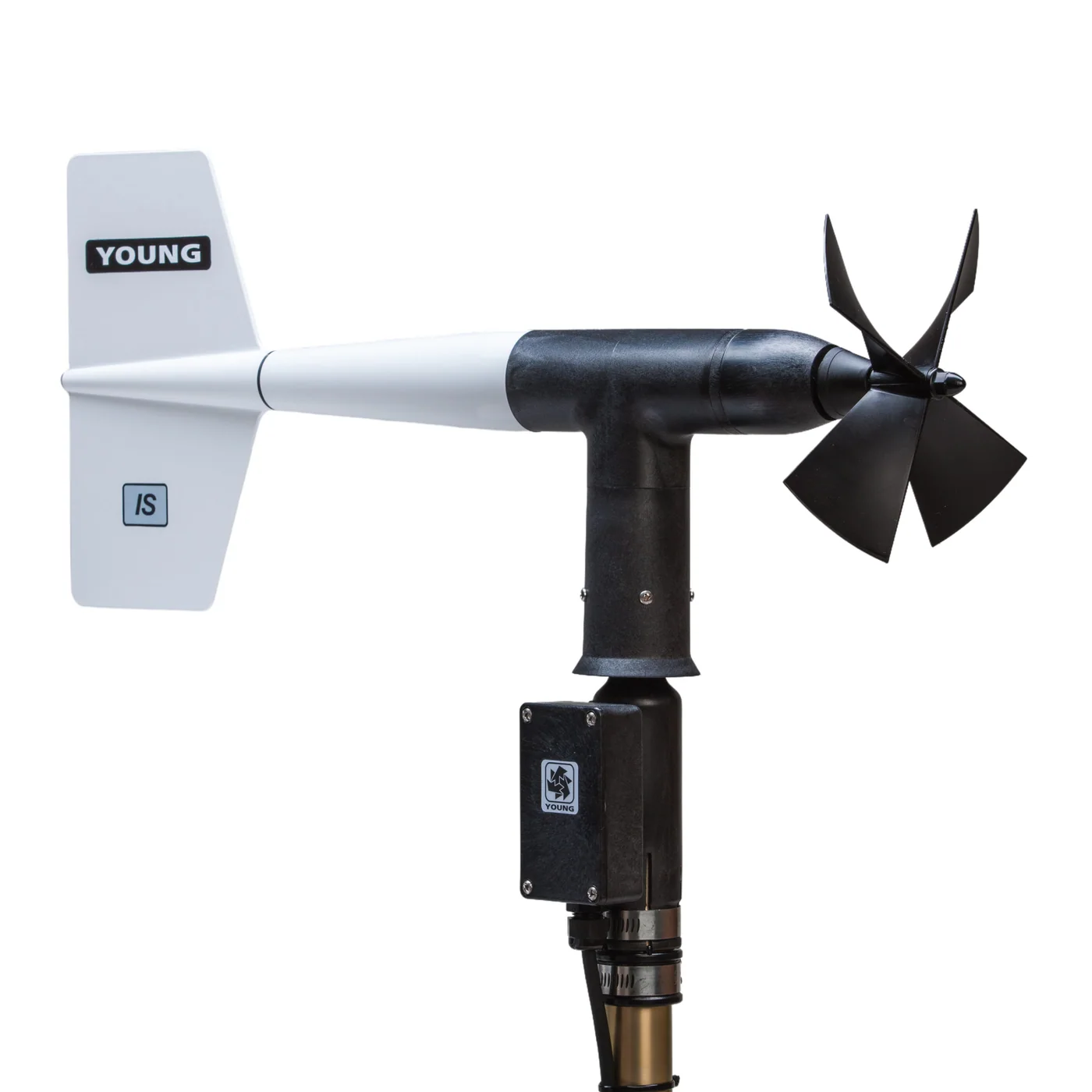
R.M. Young 05501LM Wind Monitor I.S.

Intrinsically safe Wind Monitor for Class 1 Division 1 areas, UL 913 tested, 4-20 mA outputs.

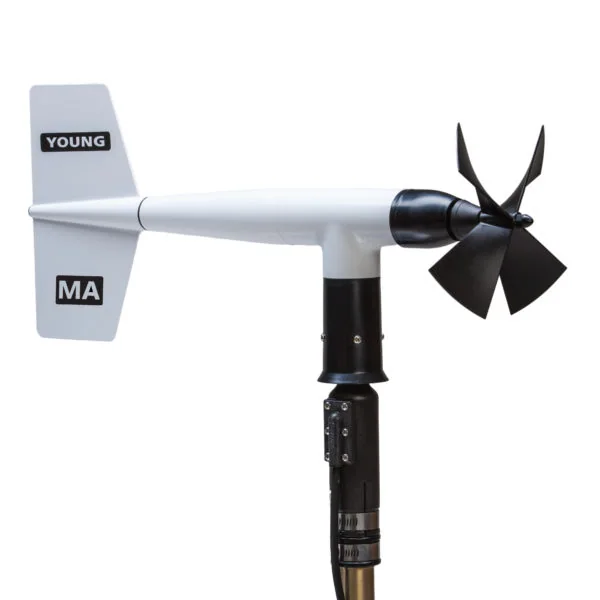
The YOUNG Model 05501LM Wind Monitor-IS measures horizontal wind speed and direction and can safely be used in Class 1, Division 1, Group A, B, C and D hazardous areas. It is tested to UL 913, and internal circuitry converts the sensor signals into isolated 4 to 20 mA current outputs.

  • Class 1, Division 1, Group A, B, C, D hazardous areas
  • Tested to UL 913 for intrinsically safe apparatus
  • Isolated 4 to 20 mA outputs generated in the sensor
SPECIFICATIONS
Model 05501LM Wind Monitor-IS
Area Class 1, Division 1, Groups A, B, C, D
Standard UL 913, intrinsically safe apparatus
Speed sensing Four-blade helicoid propeller, AC sine wave
Direction sensing Vane on a precision potentiometer
Output Isolated 4-20 mA current, both channels
Requirement Intrinsic safety achieved only with approved barriers
Description

Wind measurement inside a classified area is a problem of signals rather than of wind. The mechanical part of an anemometer is inert - a propeller and a vane - but the electrical part generates and carries signals, and in a Division 1 area, where a flammable atmosphere may be present under normal operation, that circuit has to be incapable of igniting it. The 05501LM is the intrinsically safe version of the Wind Monitor, and YOUNG state it can safely be used in Class 1, Division 1, Group A, B, C and D hazardous areas - which is the widest of the North American gas group classifications, Group A being acetylene and Group B hydrogen.

The sensing principle is the familiar one. A four-blade helicoid propeller measures wind speed, generating an AC sine wave as it rotates, and direction comes from a vane attached to a precision potentiometer inside an internal housing. That gives the same well-characterised response as the rest of the Wind Monitor family, which matters because a hazardous-area installation should not mean accepting a less capable instrument.

What differs is what happens to those signals. Internal circuitry converts them into isolated 4 to 20 mA current outputs, and the choice is significant in two ways. Intrinsic safety depends on limiting the energy in the circuit, and a current loop is straightforward to constrain and to certify with a barrier or isolator at the safe-area end. Beyond the certification, 4 to 20 mA is the right output for a long run in an electrically noisy industrial environment - current loops are immune to voltage drop over distance and reject induced noise in a way that a millivolt signal or a raw potentiometer output does not. A live-zero at 4 mA also means a broken wire reads as a fault rather than as zero wind.

Construction is UV stabilised plastic with stainless steel and anodised aluminium fittings. The plastic body is deliberate rather than a cost decision: it is non-metallic, so there is no galvanic corrosion at the fittings, and it is unaffected by the sunlight that degrades ordinary plastics. It installs on standard 1-inch IPS pipe like the rest of the range.

The point to settle at design stage is the safe-area side. An intrinsically safe sensor is only intrinsically safe as part of a certified loop, which means the barrier or isolator, the cable parameters and the earthing all form part of the assessment. Supplying the sensor alone does not deliver a compliant installation, so we specify it with the loop it belongs to.

Features

  • Class 1, Division 1, Groups A to D. Certified for areas where a flammable atmosphere may be present in normal operation, including acetylene and hydrogen groups.
  • Isolated 4-20 mA outputs. Generated inside the sensor, easy to constrain for intrinsic safety and immune to volt drop on long runs.
  • Live zero. A broken wire reads as a fault rather than as calm.
  • Same sensing principle as the range. Four-blade helicoid propeller and potentiometer vane, so response is well characterised.
  • Non-metallic body. UV stabilised plastic with stainless steel and anodised aluminium fittings - no galvanic corrosion, no sunlight degradation.
  • Standard 1-inch IPS mounting. Interchangeable mechanically with the rest of the Wind Monitor family.
  • Specified with its loop. Barrier or isolator, cable parameters and earthing treated as part of the deliverable.

Applications

Wind measurement inside the classified boundary.

  • Refineries and petrochemical plants. Met measurement within process areas.
  • Offshore platforms. Wind sensing in Division 1 locations.
  • Tank farms and terminals. Wind data for loading and venting decisions.
  • LNG facilities. Where gas group coverage has to be wide.
  • Gas dispersion monitoring. Wind input to a detection or dispersion model.
  • Flare and vent areas. Wind measurement close to the release point.

Support & Documents

PT Vivo Asia Teknologi Indonesia supplies weather and helideck monitoring as an integrated, commissioned system rather than as individual instruments. Our scope typically covers:

  • Selection against CAP 437, the relevant national requirement or your operator's standard.
  • Sensor siting to avoid the structure's own turbulence, exhaust and heat sources.
  • Signal, power and hazardous-area design across the deck and up to the control room.
  • Supply, installation, termination and commissioning.
  • Integration with the helideck monitoring system, status lighting and reporting outputs.
  • Calibration, periodic verification and ongoing maintenance.

Ranges, accuracies, approvals and electrical details vary by variant and are confirmed against the current manufacturer datasheet at quotation stage. Tell us the structure, the standard you are working to and the parameters you must report, and we will come back with a system design and a full bill of materials.

Use the enquiry button above for a datasheet, a specification or a project quotation.

Related products