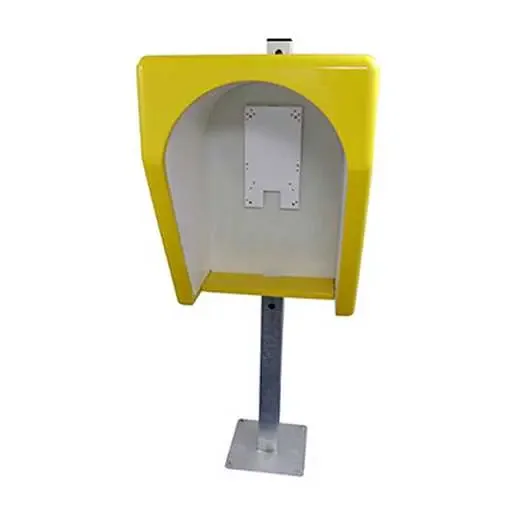
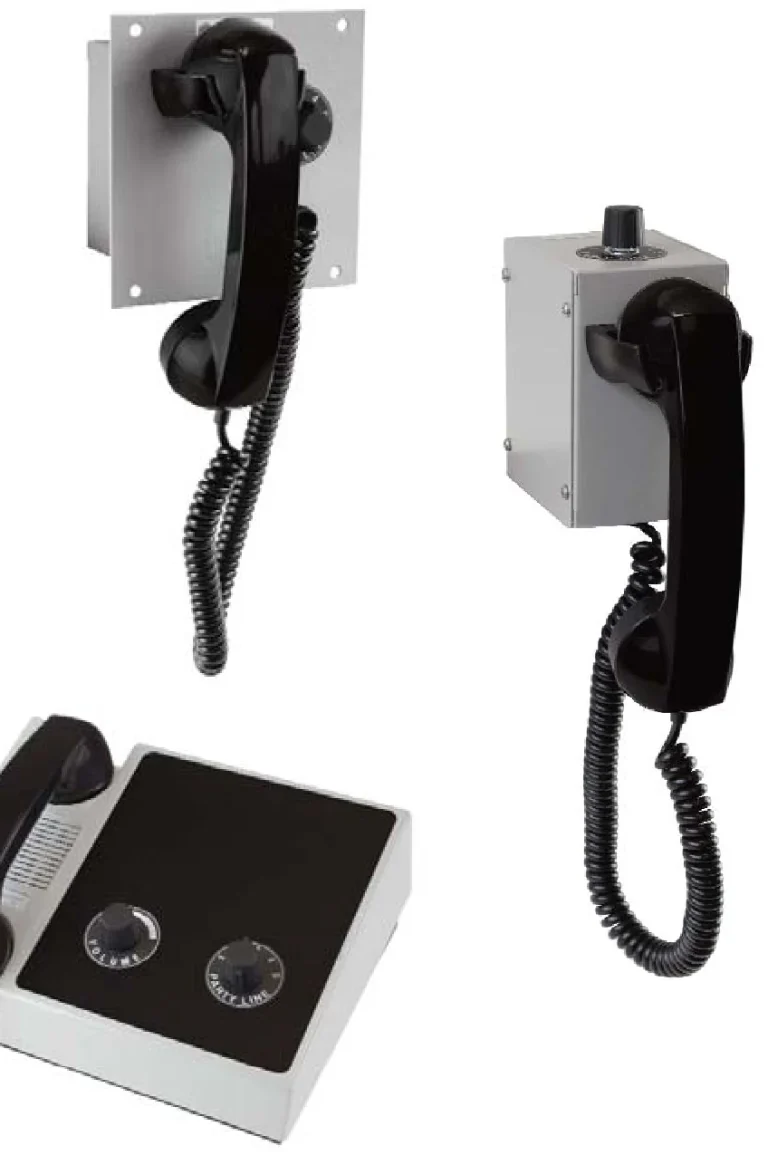
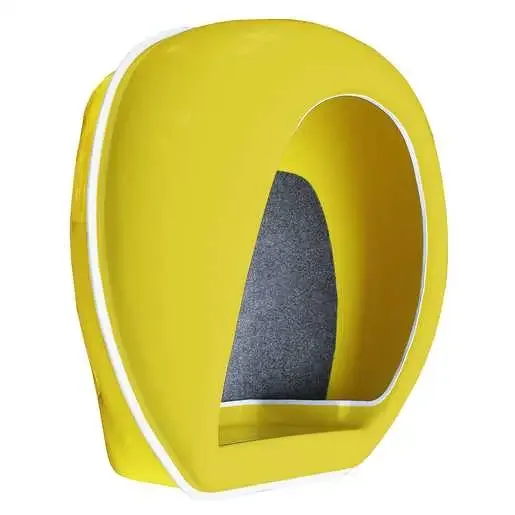
A hood over the handset, so a call can be heard where a plant is at its loudest.
An acoustic hood is a shaped enclosure fitted around a telephone or paging handset in a high-noise area. It shields the user’s head and the handset from surrounding noise, so a conversation is possible where an unprotected telephone would be useless.
Makes a handset usable in noise that would otherwise defeat it
Shields both the ear and the microphone from ambient noise
FittingAround a wall or pedestal-mounted telephone
ConstructionConfirmed at quotation
EnvironmentHigh-noise industrial areas
NoteSpecified with the telephone it serves
Description
There are places on a plant where a telephone is physically present and practically
unusable. Next to a compressor house, a turbine hall or a running conveyor, ambient noise
swamps both directions of the call: the person cannot hear the earpiece, and the microphone
picks up more plant than speech. Turning the volume up does not fix it, because the noise is
amplified along with everything else.
An acoustic hood addresses this physically rather than electrically. It is a shaped
enclosure, mounted around the handset position, that the user leans into. Its walls and lining
block and absorb noise arriving from the sides and behind, creating a quieter volume around
the head. The improvement is felt in both directions - the earpiece becomes audible because
less noise reaches the ear, and the far end hears speech instead of plant because less noise
reaches the microphone.
Hoods are normally specified together with the telephone they serve, since the two share a
mounting and have to suit the same environment. The practical considerations are the ones you
would expect of anything mounted on a plant: it has to be robust enough for industrial use,
its material has to survive the atmosphere it is in, and it has to be usable by someone
wearing gloves, a helmet and hearing protection. Where the position falls inside a classified
area, the telephone and any associated equipment have to be certified for that zone, which is
a question about the telephone rather than the hood.
Note that a hood does not replace hearing protection or a properly designed PAGA scheme. It
solves one specific problem - two-way conversation at a fixed point in a loud place - and it
solves it well. Broadcast announcements in the same area remain a matter of loudspeaker
coverage and intelligibility.
Features
Two-way improvement. Shields the ear so the handset can be heard, and
the microphone so speech reaches the far end.
Physical, not electronic. Reduces the noise arriving at the user rather
than amplifying speech over it.
Fixed-point solution. Makes a defined telephone position usable in an
area that would otherwise need someone to walk away to take a call.
Industrial construction. Built for plant duty and for users in gloves,
helmets and hearing protection.
Specified with the telephone. Mounting, material and position treated as
one station rather than two purchases.
Applications
Hoods go where the noise floor makes an ordinary telephone position pointless.
Compressor and pump houses. Continuous high noise at a fixed
location.
Turbine and generator halls. Power generation plant rooms.
Engine rooms and machinery spaces. On vessels and offshore
structures.
Process areas and conveyors. Where operators need to call the control
room from where they are working.
Workshops and fabrication bays. Grinding, cutting and impact noise.
Loading and drilling areas. Outdoor positions with sustained equipment
noise.
Tell us the position and the measured or expected noise level and we will specify the
telephone, the hood and the mounting together.
Support & Documents
PT Vivo Asia Teknologi Indonesia designs and commissions public address and general
alarm systems rather than simply supplying the parts. Our scope typically covers:
Acoustic coverage study against your layout and measured background noise levels.
Loudspeaker selection, placement, tapping and zone design.
Amplifier, controller and cabling design, including line monitoring where required.
Supply, installation, termination and commissioning.
Intelligibility testing and sign-off against the applicable standard.
Integration with fire and gas detection, ESD and telephone systems.
Operator training, spares provisioning and ongoing maintenance.
Ratings, approvals and acoustic figures vary by model and are confirmed against the
current manufacturer datasheet at quotation stage. Tell us the areas to be covered, the
hazardous-area classification and the noise levels you are working against, and we will
come back with a coverage design and a full bill of materials.
Use the enquiry button above for a datasheet, a specification or a project quotation.

 1 / 2
1 / 2