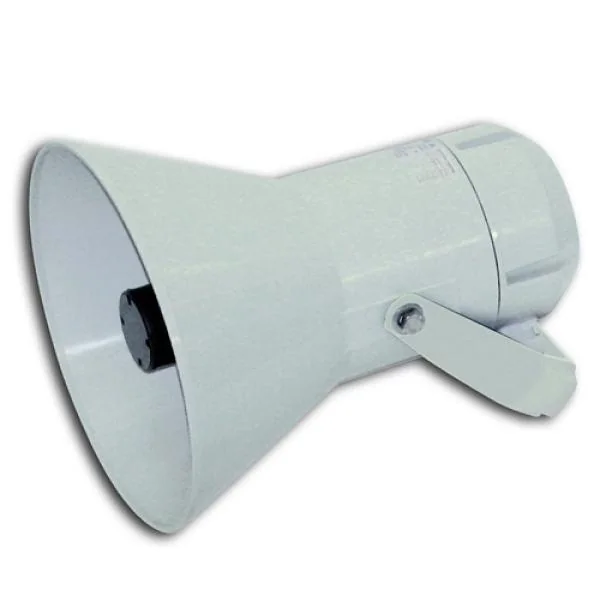
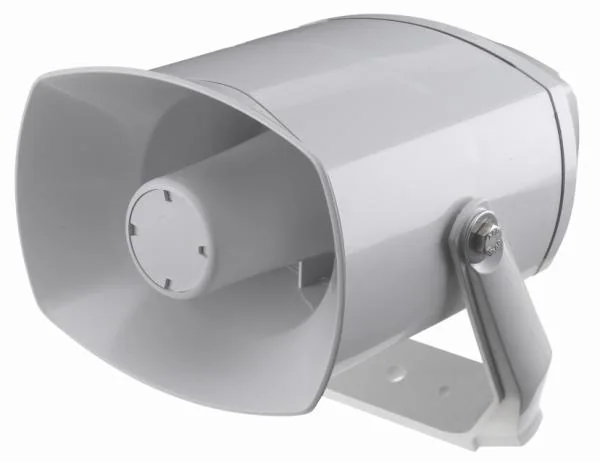
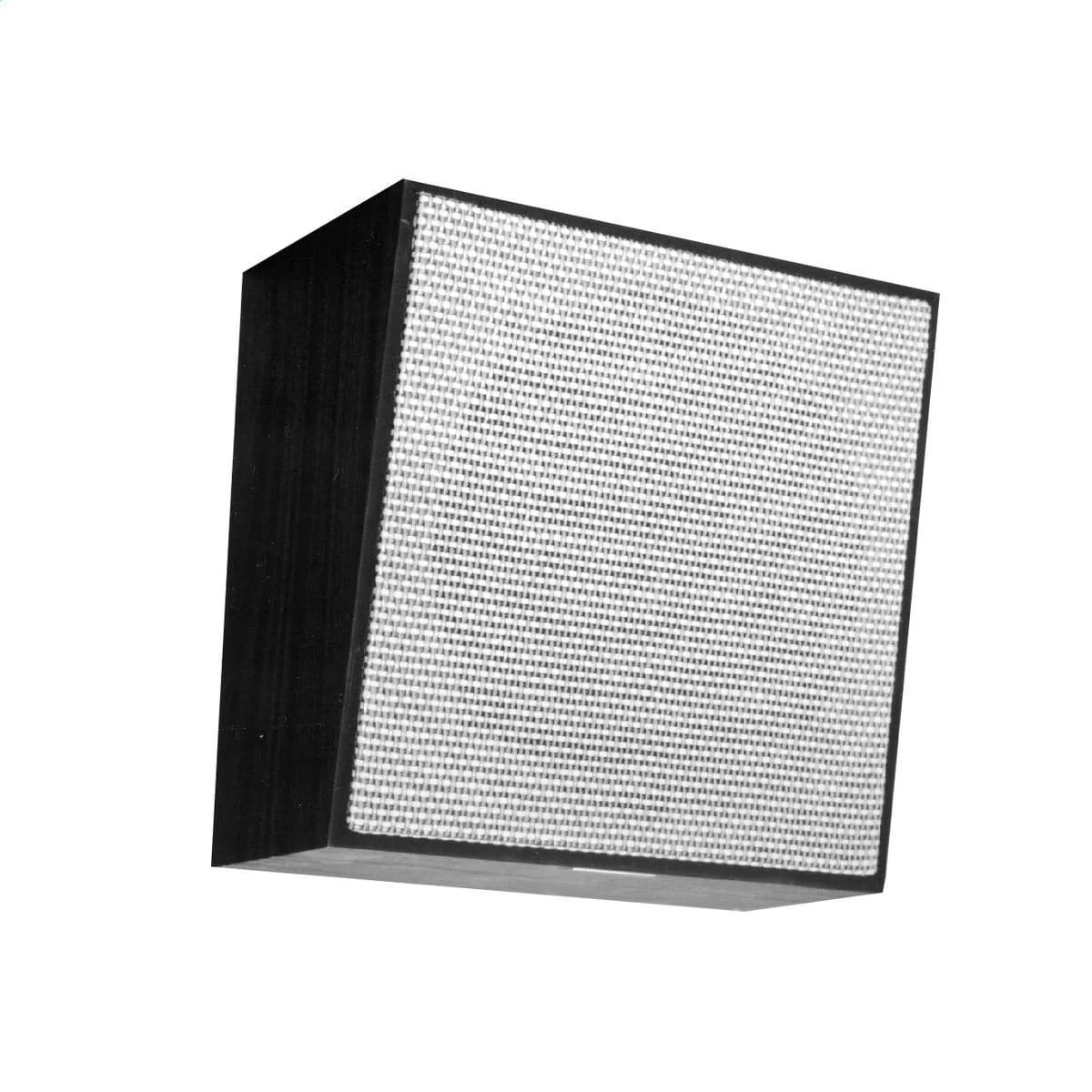
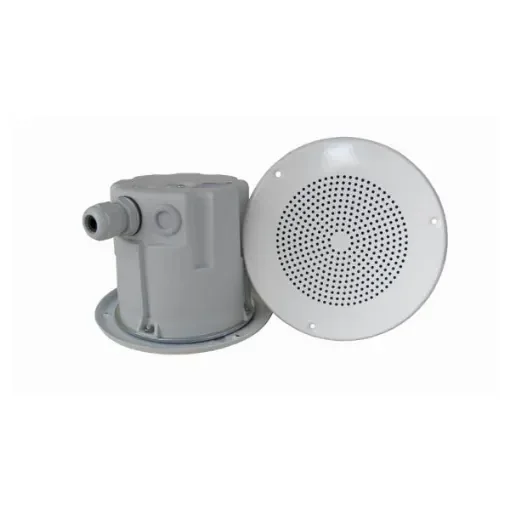
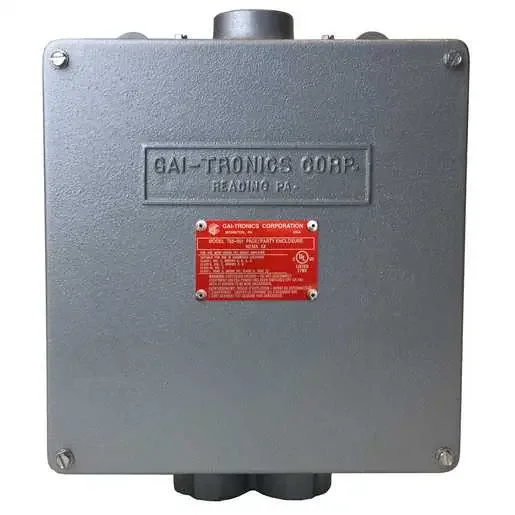
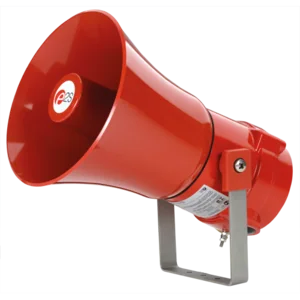
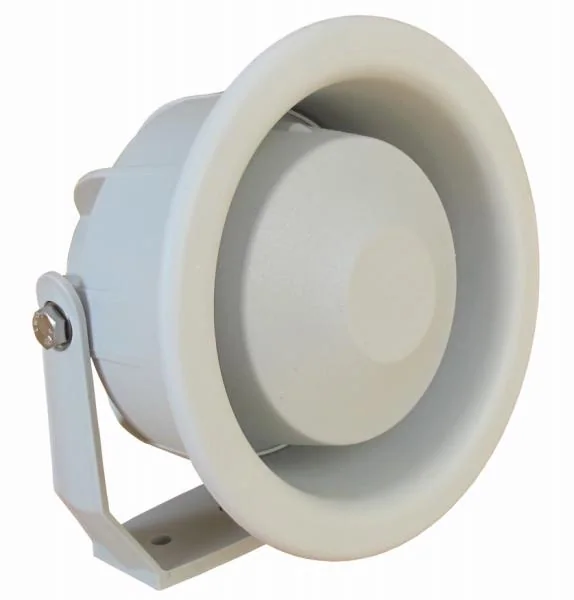
DNH horns, from discreet miniatures to high-power alarm horns, for harsh environments.
The DNH horn range runs from small, discreet miniatures to high-power, high-output alarm horns. Whether the position is outside a factory or on a naval vessel, these are designed for harsh environments rather than adapted to them.
Miniature through to high-power, high-output alarm horns
Designed for harsh environments, factory yard to naval vessel
Ingress protectionSolid to IP6X, liquid to IP9X across the range
SelectionPower, SPL at 1 W/1 m, approvals, temperature
Description
A horn loudspeaker exists to be heard a long way off. Instead of radiating sound from an
open cone, it couples a compression driver to a flared horn, which concentrates the output
into a defined direction and converts electrical power into audible sound far more efficiently
than a cone can. The consequence for a site is straightforward: fewer devices, less cable, and
speech that stays intelligible over machinery noise and wind.
DNH's range spans a genuinely wide span of duty - small, discreet miniatures at one end and
high-power, high-output alarm horns at the other - and they cite the same product family
working outside a factory and on a naval vessel. That breadth is the reason a horn is the
default outdoor device on industrial sites: the enclosure and driver are engineered for
weather, salt and vibration from the start, so there is no separate outdoor variant to
compromise on.
Directionality is what has to be designed rather than bought. A horn throws sound where it
is aimed and much less to the sides, so coverage is a matter of aiming and spacing rather than
simply adding devices. Over-driving one horn to reach further makes speech harder to
understand, not easier, because reflections arrive late and smear it; two properly aimed horns
almost always beat one loud one. Intelligibility, not sound pressure, is the measure that
matters for an alarm system, since an announcement nobody can make out is the same as no
announcement.
DNH let you select on the axes that decide whether a horn survives its position: solid
particle and liquid ingress protection, rated power, sensitivity expressed as SPL at 1 watt
and 1 metre, product approvals, and maximum and minimum operating temperature. Those are the
figures we work from, together with the noise survey, when we lay out coverage.
Features
Efficient by design. Horn loading turns amplifier power into audible
output far better than a cone, so fewer devices cover more ground.
Miniature to high-power alarm. One range covering discreet paging and
full alarm duty.
Built for harsh environments. DNH's stated design target, from factory
exteriors to naval vessels.
Rated ingress protection. Solid particle and liquid ratings published
per model, up to IP6X and IP9X across the range.
Published sensitivity. SPL at 1 W/1 m for every model, which is what
coverage calculations actually need.
Stated temperature limits. Maximum and minimum operating temperature per
model, not a generic figure.
Marine approvals available. DNH offer an EU Marine Equipment Directive
certified range including outdoor horns.
Applications
Horns cover the outdoor and high-noise parts of a PAGA scheme.
Process areas and plant. Where machinery noise sets the level speech has
to beat.
Jetties, quaysides and open decks. Long throw in salt and driving
rain.
Vessels and offshore structures. Weather decks and external
walkways.
Yards, laydown areas and car parks. Large open areas with few mounting
positions.
Perimeters and muster points. Where an alarm has to reach people
outdoors and at distance.
Warehouses and workshops. High, reverberant spaces where aiming matters
more than volume.
Support & Documents
PT Vivo Asia Teknologi Indonesia designs and commissions public address and general
alarm systems rather than simply supplying the parts. Our scope typically covers:
Acoustic coverage study against your layout and measured background noise levels.
Loudspeaker selection, placement, tapping and zone design.
Amplifier, controller and cabling design, including line monitoring where required.
Supply, installation, termination and commissioning.
Intelligibility testing and sign-off against the applicable standard.
Integration with fire and gas detection, ESD and telephone systems.
Operator training, spares provisioning and ongoing maintenance.
Ratings, approvals and acoustic figures vary by model and are confirmed against the
current manufacturer datasheet at quotation stage. Tell us the areas to be covered, the
hazardous-area classification and the noise levels you are working against, and we will
come back with a coverage design and a full bill of materials.
Use the enquiry button above for a datasheet, a specification or a project quotation.

 1 / 3
1 / 3