Over twenty DNH ceiling models, 6 W to 60 W, with EN 54-24 certified options.
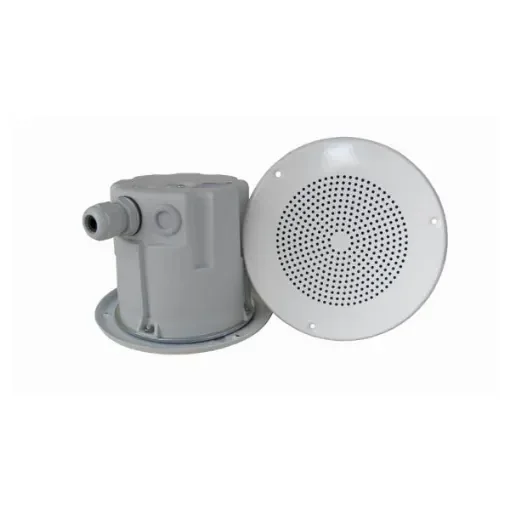
DNH ceiling loudspeakers run from a simple 6 watt unit to a 60 watt music loudspeaker, in over twenty models and a variety of sizes, materials and mounting methods. They serve background music, public address and, where certified, EN 54-24 emergency systems.
In any finished interior with a suspended or accessible ceiling, a ceiling loudspeaker is
the right device. It fires downward into the occupied space from directly overhead, which
means every listener is a similar distance from a loudspeaker and the level is even across the
room. That evenness is what makes speech intelligible in an office, a corridor or a mess room:
nobody is straining at the far end and nobody is being shouted at underneath one.
DNH offer over twenty models here, and the span is wider than people expect - from a simple
6 watt unit up to a 60 watt music loudspeaker. That range covers two genuinely different
jobs. A low-wattage unit spaced regularly is the correct answer for speech and paging, where
many quiet sources beat a few loud ones. A high-wattage music model suits spaces where the
system also has to deliver music at a real level. Specifying the music model everywhere wastes
amplifier capacity and cable; specifying the small one everywhere leaves the music thin.
Where the system has an emergency function, EN 54-24 certification is again the deciding
factor. DNH state that their ceiling loudspeakers can be used for background music, public
address and, where certified, EN 54-24 emergency systems - the "where certified" being the
important qualification. A voice alarm scheme needs the certified models, and that has to be
established at selection rather than discovered at handover.
The variety of sizes, materials and mounting methods is what makes these work in practice.
Ceiling voids differ, fire-rated ceilings impose their own requirements, wet and wash-down
areas need appropriate materials, and a retrofit into an existing ceiling is a different
problem from a new build. DNH describe a variety of easy and clever ways to install them, and
choosing the right mounting is what keeps installation quick and the finished ceiling
tidy.
Features
Over twenty models. Enough range to match the device to the room rather
than the other way round.
6 W to 60 W. Low-wattage units for speech and paging, high-wattage music
models where music matters.
EN 54-24 where certified. Certified models for use in EN 54 emergency
voice alarm systems.
Even coverage. Downward firing from overhead gives consistent level
across a space, which is what intelligibility depends on.
Varied sizes and materials. Suited to different ceiling types, voids and
environments.
Several mounting methods. Including options intended for quick
installation and retrofit.
One device, three duties. Background music, public address and, on
certified models, emergency announcement.
Applications
Ceiling loudspeakers cover the occupied interiors.
Offices and meeting rooms. Paging and background music at low
level.
Corridors and circulation. Even coverage along a route, with EN 54-24
models on escape routes.
Mess rooms, canteens and welfare. Where music and announcements share
the same system.
Accommodation blocks. Onshore and offshore living quarters.
Control rooms and technical spaces. Announcements without a wall-mounted
cabinet in the way.
Reception and public areas. Where the ceiling should look finished
rather than equipped.
Support & Documents
PT Vivo Asia Teknologi Indonesia designs and commissions public address and general
alarm systems rather than simply supplying the parts. Our scope typically covers:
Acoustic coverage study against your layout and measured background noise levels.
Loudspeaker selection, placement, tapping and zone design.
Amplifier, controller and cabling design, including line monitoring where required.
Supply, installation, termination and commissioning.
Intelligibility testing and sign-off against the applicable standard.
Integration with fire and gas detection, ESD and telephone systems.
Operator training, spares provisioning and ongoing maintenance.
Ratings, approvals and acoustic figures vary by model and are confirmed against the
current manufacturer datasheet at quotation stage. Tell us the areas to be covered, the
hazardous-area classification and the noise levels you are working against, and we will
come back with a coverage design and a full bill of materials.
Use the enquiry button above for a datasheet, a specification or a project quotation.