Navigation lights are a legal requirement and a monitored one: a vessel must show the
correct lights for what it is doing, and the bridge must know if one has failed. The navigation
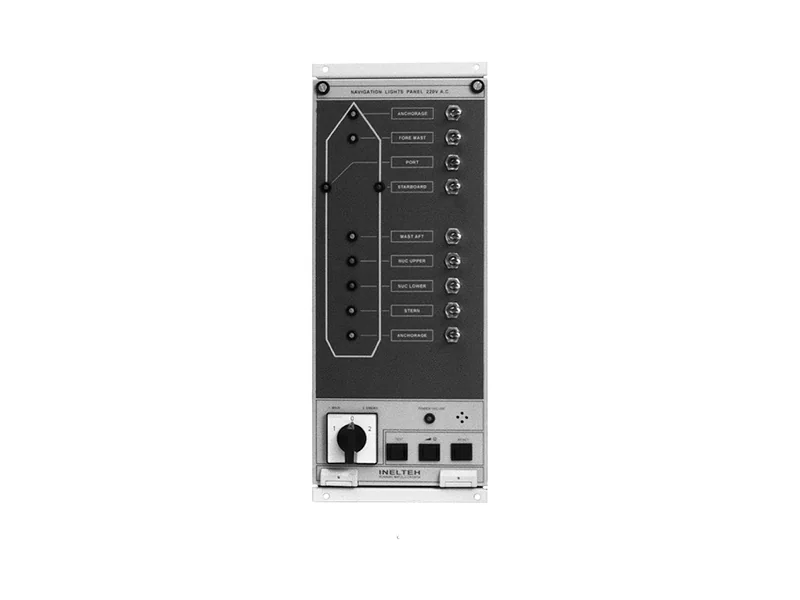
light panel is what enforces both - it powers each lantern, watches whether current is actually
flowing, and alarms when a lamp fails. It is one of the few panels on a bridge whose failure
directly stops the vessel from being lawfully underway.
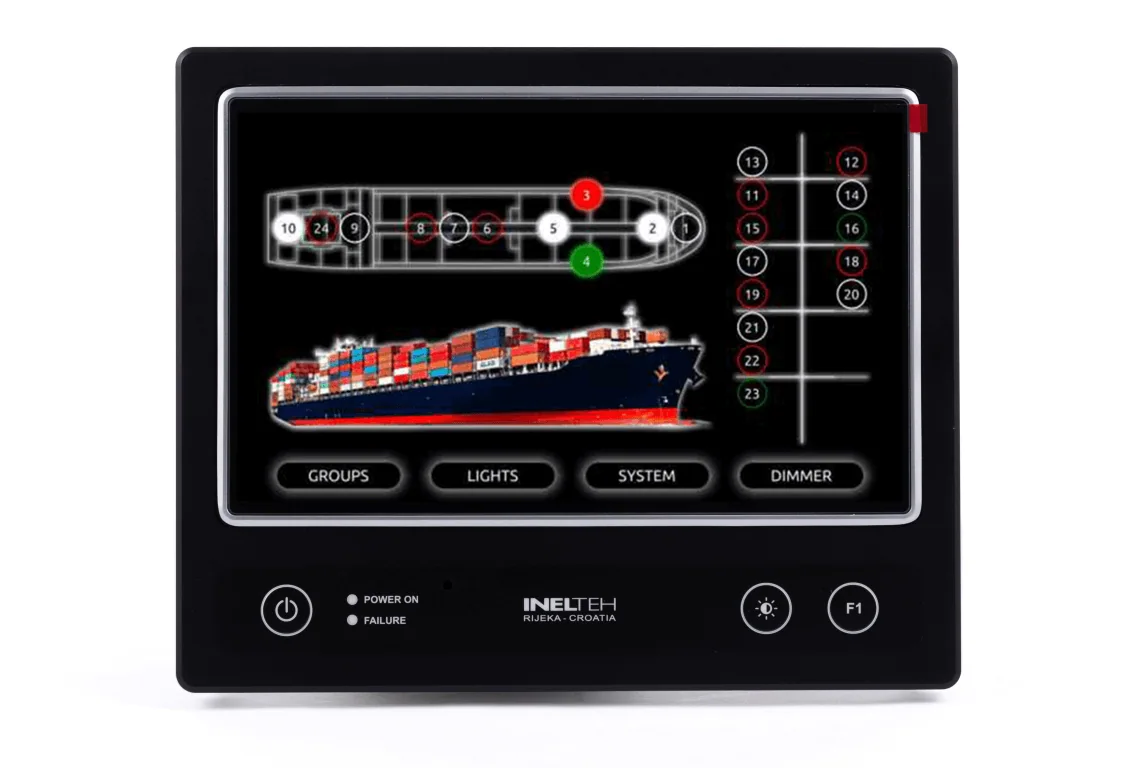
Inelteh's approach is a programmable touchscreen with a 7 inch colour display, and the
feature that matters most is that the built-in software allows the light configuration to be
programmed in the main unit itself, without external devices or software. That sounds like
convenience and is really about the vessel's whole service life. A panel that needs a laptop, a
cable and a licensed configuration tool to change is a panel that gets changed by a specialist
visit; one programmed from its own screen can be reconfigured when a lantern is replaced with
a different type, which is what actually happens over twenty years.
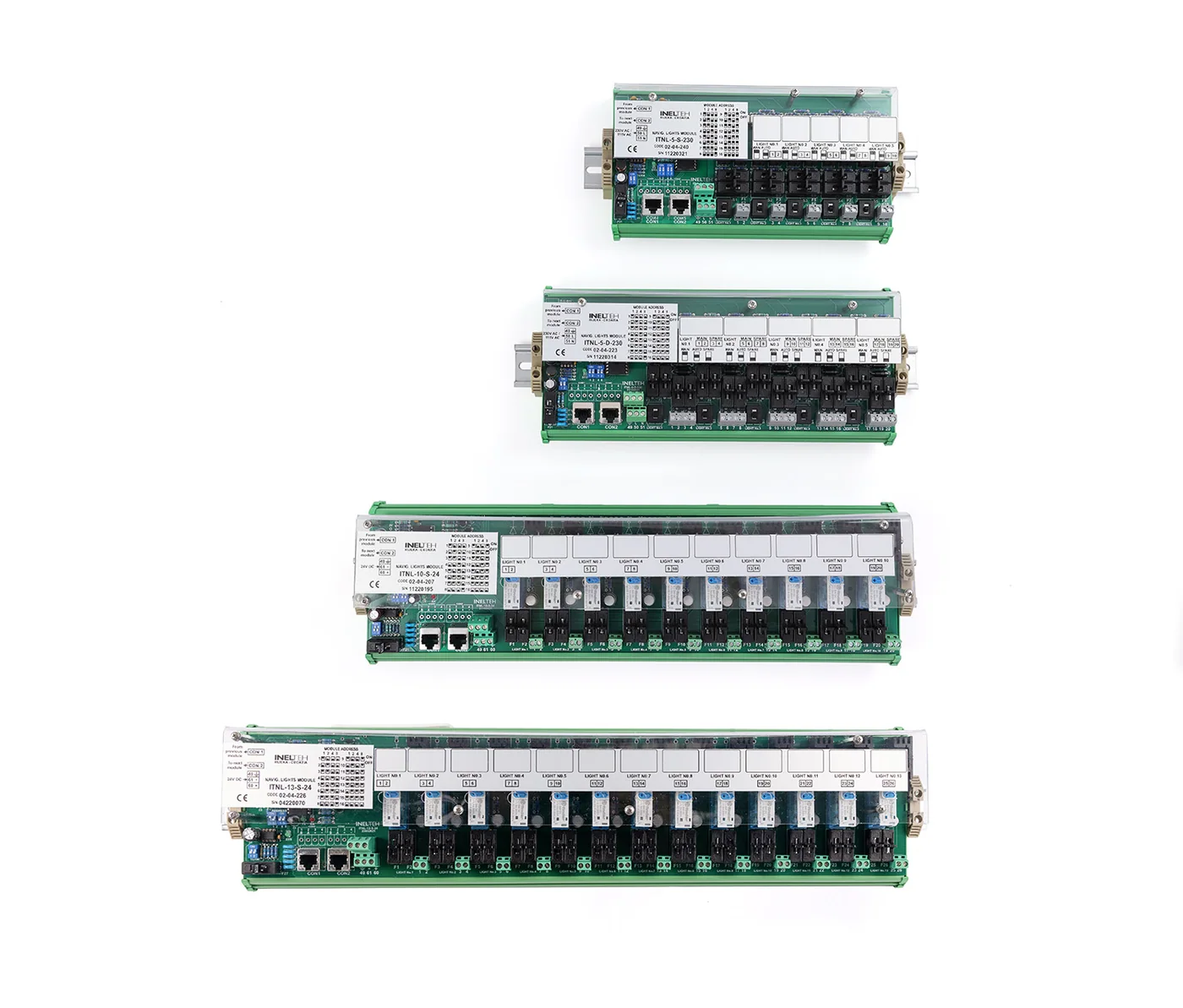
The panels control LED navigation lanterns, conventional lanterns, or a combination of both,
and Inelteh state they can be used with various brands, naming Aqua Signal. That mixed capability
is the practical reason to choose one during a refit. LED and filament lanterns behave
completely differently from a monitoring point of view - an LED lantern draws a fraction of the
current, so a panel expecting a filament load will read a working LED as a failed lamp. A panel
that handles both lets a vessel change lanterns over gradually rather than in one go.
The power supply module is available in 230 VAC, 115 VAC or 24 VDC to match the lanterns,
with a special configuration for lanterns having a 230 VAC main and 24 VDC backup supply -
which is the standard arrangement for keeping navigation lights lit on a vessel's emergency
supply. Behind that sits the feature worth insisting on: manual, emergency on/off operation for
each lamp individually, in case of electronic failure. Every automated system on a bridge should
have a way to be bypassed by hand, and for navigation lights that is not a refinement but the
difference between a fault and a detention.
Two integration points complete it. Two-way NMEA 0183 communication provides the interface
to the voyage data recorder, so which lights were shown is recorded alongside everything else.
And integration with bridge systems is available using integrated remote control, so the panel
is part of the bridge rather than a separate box beside it. The display carries a dimming
function, which on a darkened bridge at night is not cosmetic - a bright panel destroys the
night vision the watchkeeper depends on.

 1 / 3
1 / 3