A vessel's position feeds almost everything else on the bridge - the ECDIS, the radar
overlay, the AIS, the autopilot, the VDR - so the GNSS sensor is a piece of infrastructure
rather than an instrument someone reads. That is why it is type approved, and why the useful
questions about it are how accurate it is, how many independent satellite systems it uses, and
how many other devices it can feed.
The R6 NAV answers the second question well. Rather than relying on GPS alone it is
multi-constellation, tracking GLONASS, GALILEO and BeiDou as well. In practical terms more
constellations means more satellites in view, which matters most where the sky is partly
blocked - alongside a quay, under a crane, close to a platform's structure, in a fjord or a
narrow channel. It also means a single constellation being degraded or unavailable does not
leave the bridge without a position.
Accuracy comes from differential correction, which is what the DGNSS in the name refers to.
The system takes IALA and RTCMv2 correction input - IALA being the maritime differential
beacon service run by national authorities, which is free to use and available across most
coastal regions. Saab also offer the R6 NAV PRO variant, which adds access to Atlas
differential L-Band corrections at centimetre level. That is a genuine decision point: IALA
differential is adequate for navigation, while centimetre-level L-Band is what survey,
positioning and DP work need. Choosing the standard DGNSS variant for a survey requirement is
an expensive mistake to discover late.
The interface count is the other thing to check before ordering. This system provides dual
LAN, a 1PPS output, eight output ports and five input ports. The 1PPS output is a
once-per-second timing pulse, which is how a VDR or a recording system is kept in step with
satellite time. Eight outputs sounds generous until the position has to reach the ECDIS, the
radar, the AIS, the autopilot, the VDR and the alarm system - so it is worth counting the
consumers against the ports at design stage. Bridge Alarm Management is included, which is
what integrates the sensor's own faults into the bridge alarm system rather than leaving them
on a display nobody watches.
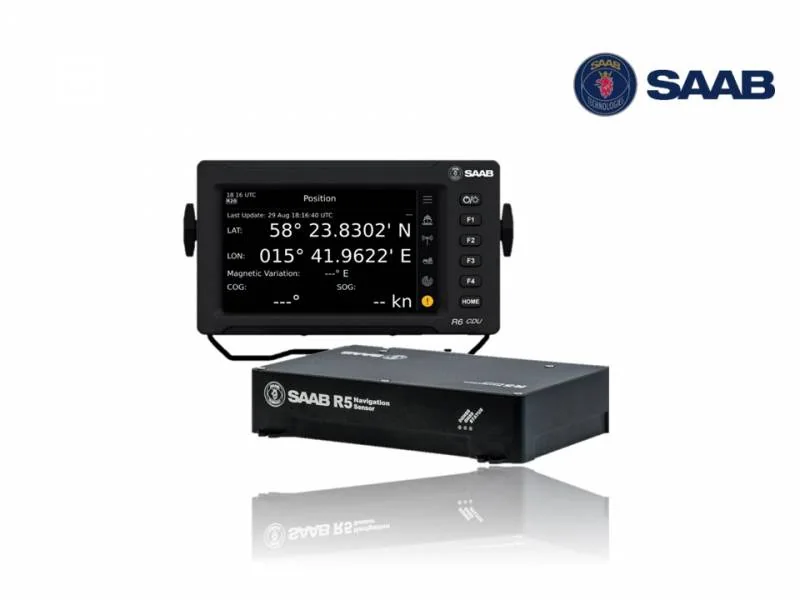
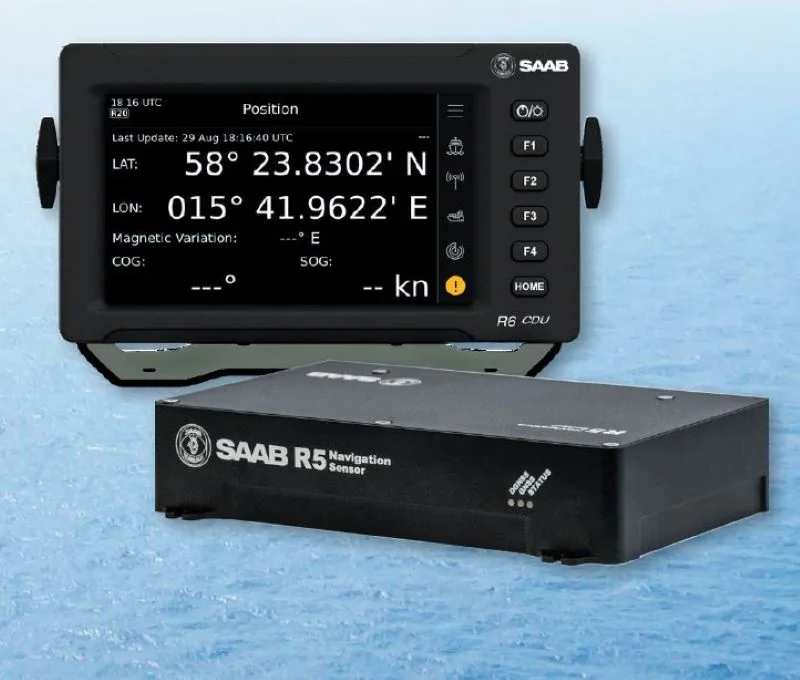
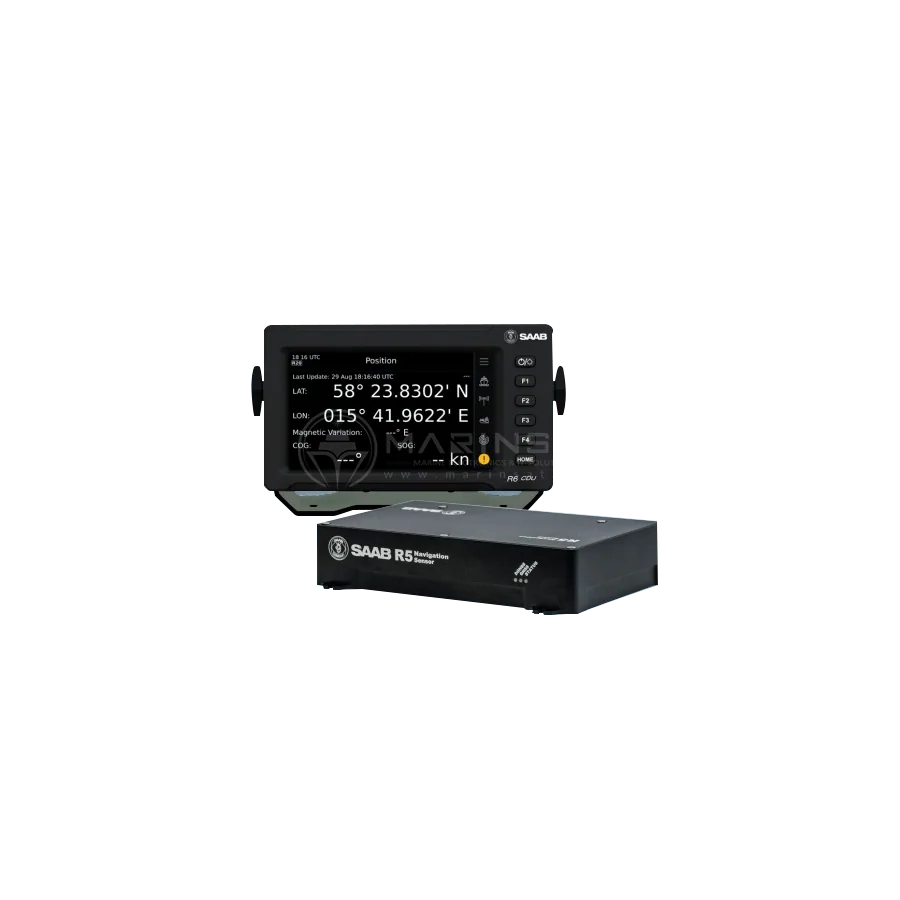
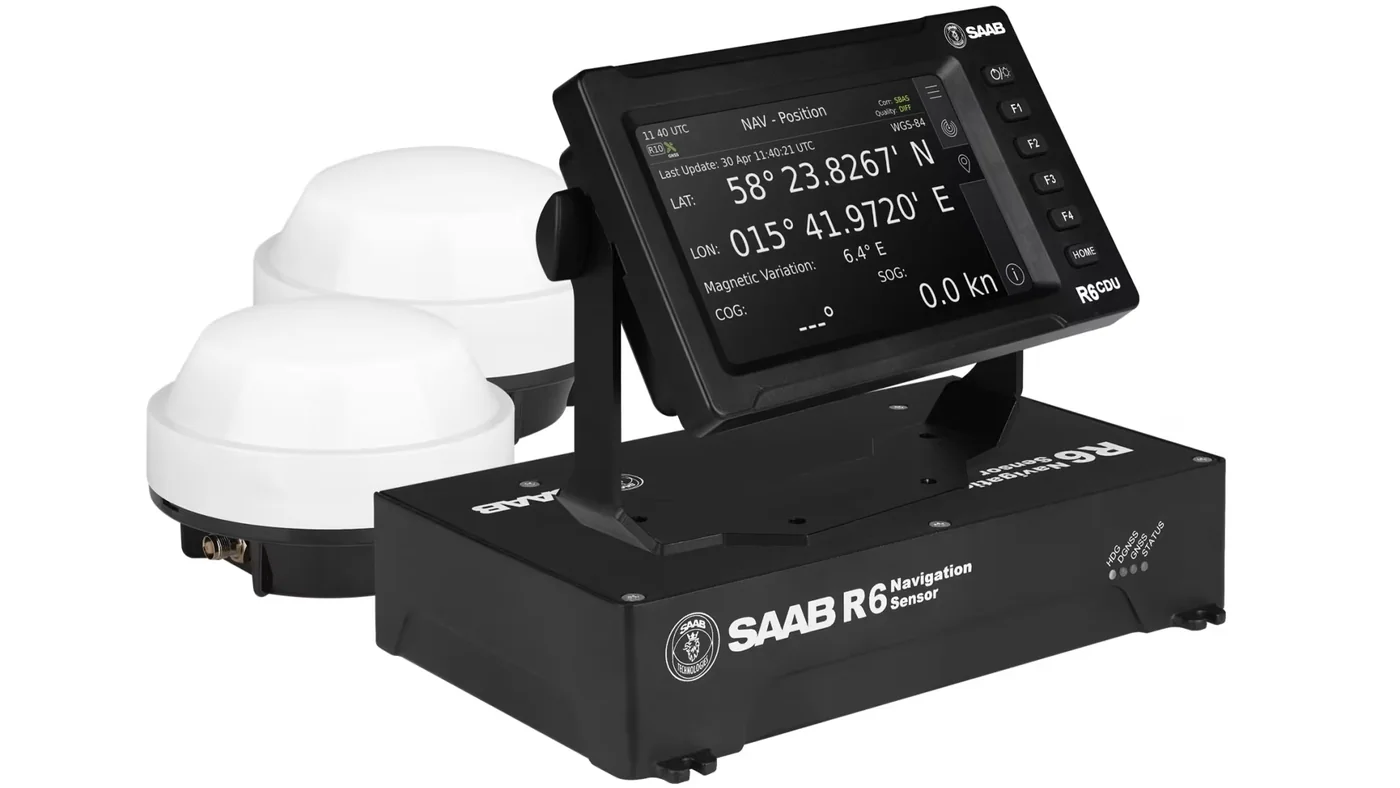
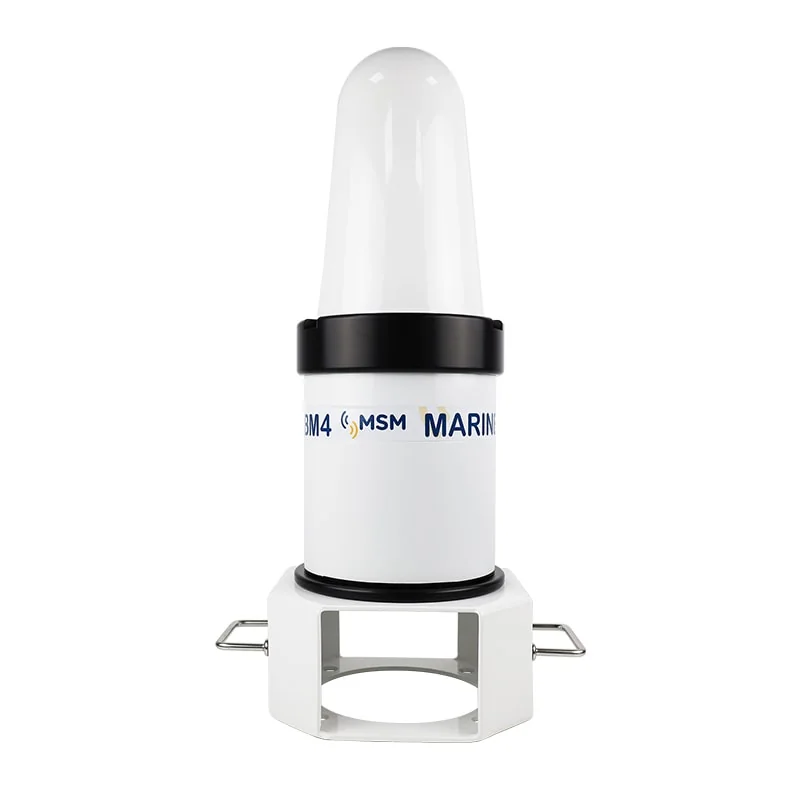
Supplied as a system under part number 7001 000-731, the kit comprises the R5 NAV DGNSS
MkIII sensor with integrated junction box, the R6 SUPREME CDU, both gimbal and flush mount
kits for the CDU, a 5 m Ethernet cable, a 2 m power cable, the MGL-5 DGNSS antenna excluding
cable, and the R6 NAV document set. Both mounting kits being included is convenient: the
console arrangement can be decided when the unit is in front of you rather than at order.

 1 / 5
1 / 5