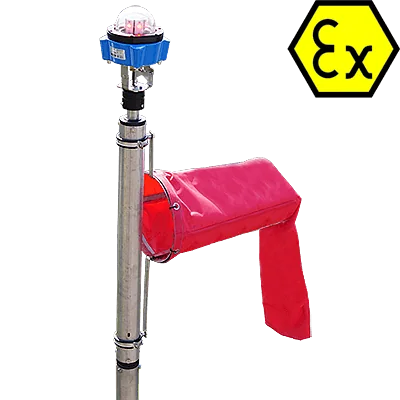
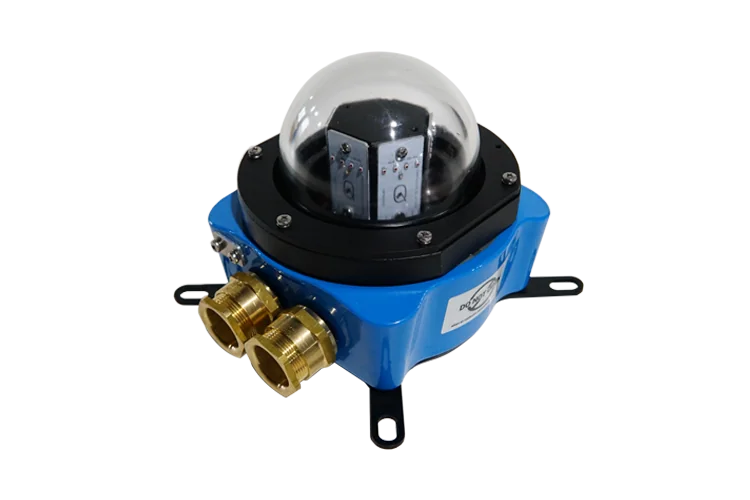
An obstruction light exists to stop an aircraft flying into a structure. Which light a given
structure needs is not a preference - it follows from the structure's height and its
surroundings, and ICAO Annex 14 sets out the classes: low intensity for lower obstacles, medium
intensity for taller ones, with candela figures attached to each. Fitting a light of the wrong
class is a compliance failure rather than a performance shortfall.
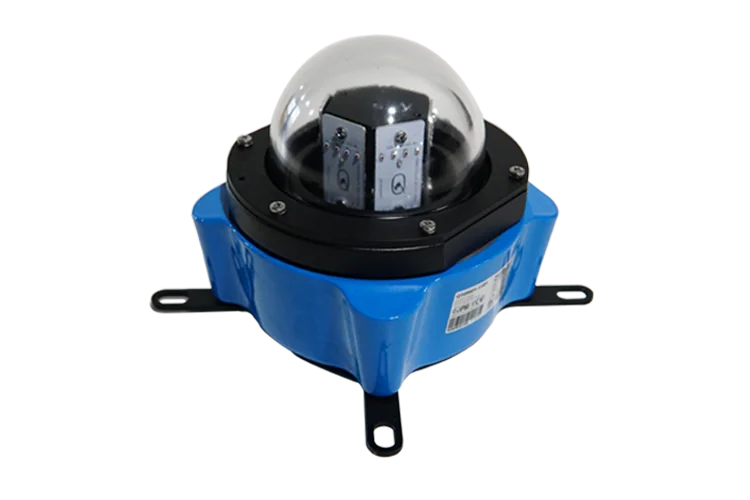
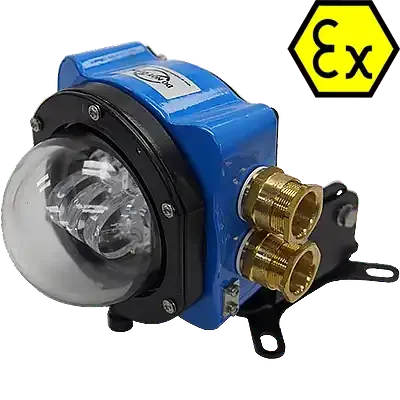
This is the higher-intensity unit in Q-Aviation's explosion-proof obstruction range, supplied
at 200 candela. Its counterpart in this catalogue is the 10 candela low-intensity unit, and the
difference between them is how far away the light has to be conspicuous. A taller structure, a
structure in an area with background lighting, or one on an approach path needs more output;
using the low-intensity unit there leaves the obstacle inadequately marked.
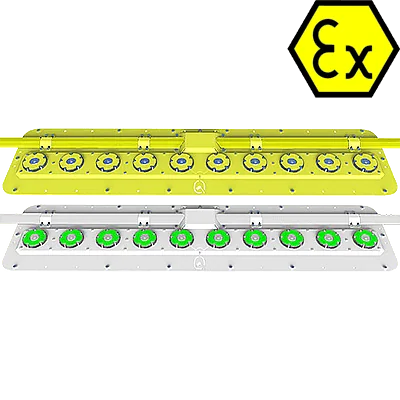
What makes this a specialist product rather than a light fitting is the certification.
Q-Aviation describe their obstruction lights as suitable for high structures including wind
turbines, explosion risk zones, chimneys, tower cranes, flares, buildings, pylons, water tanks
and petrochemical plant. On a hydrocarbon facility the light is powered electrical equipment
mounted in the open, often at the highest point of a structure that also vents gas, so it has
to be certified for the zone it occupies. An uncertified obstruction light on a classified
structure is a problem in two directions at once - an ignition risk, and a marking that cannot
be signed off.
Q-Aviation are a Dutch manufacturer specialising in helideck and helipad lighting for the
offshore industry, and they build both safe-area and explosion-proof versions of the same
products. That matters when a site has both classified and unclassified structures to mark: the
lights look and behave alike, spares overlap, and only the certification differs. The exact
zone, gas group and temperature class for the variant supplied are confirmed against the area
classification drawing at quotation - the order code alone does not settle it.