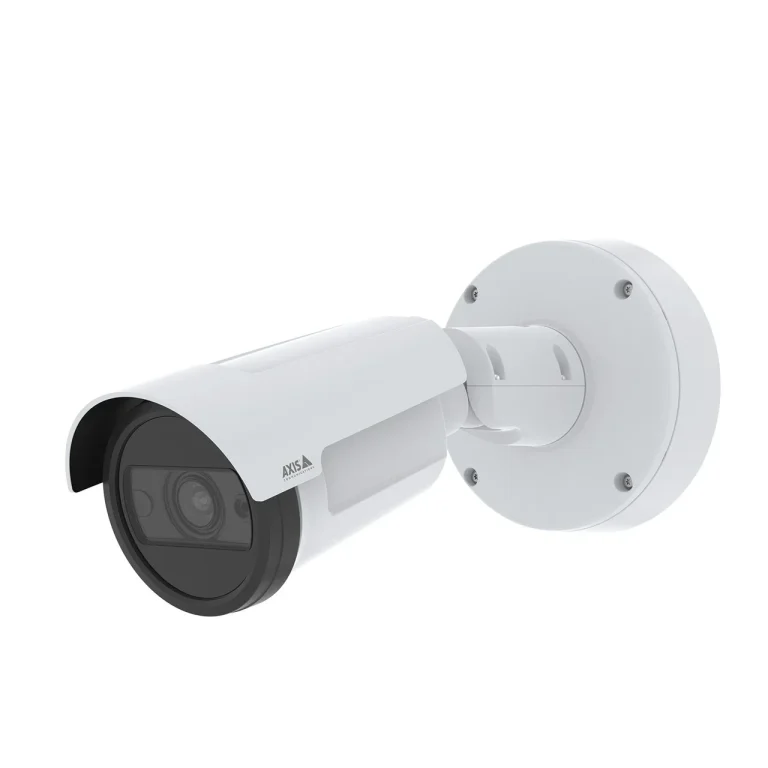
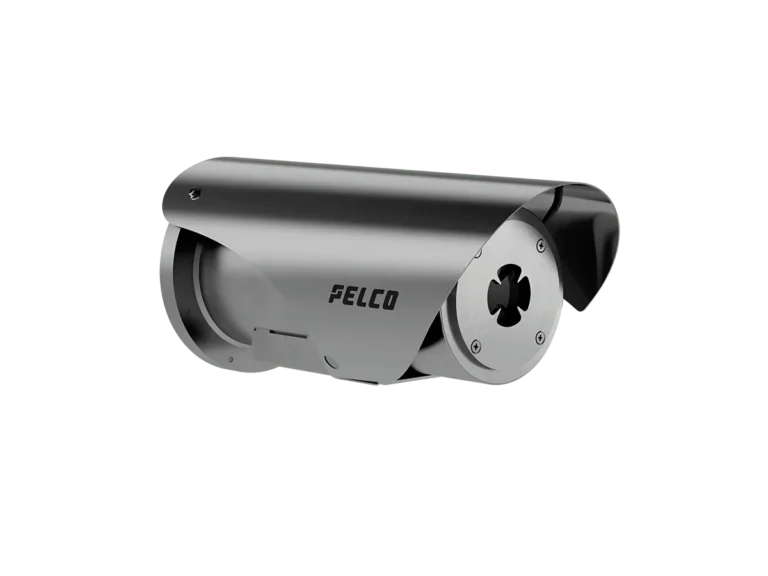
Fixed thermal cameras that detect people and vehicles in darkness, smoke and mist.
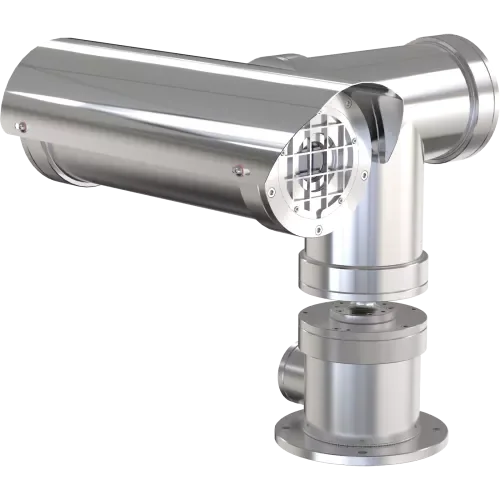
Pelco’s fixed thermal security cameras use heat-sensing technology to detect people and vehicles in complete darkness, smoke, mist and similar conditions, which makes them the usual choice for perimeter detection and situational awareness.
Detects people and vehicles in complete darkness
Holds a usable image through smoke and mist
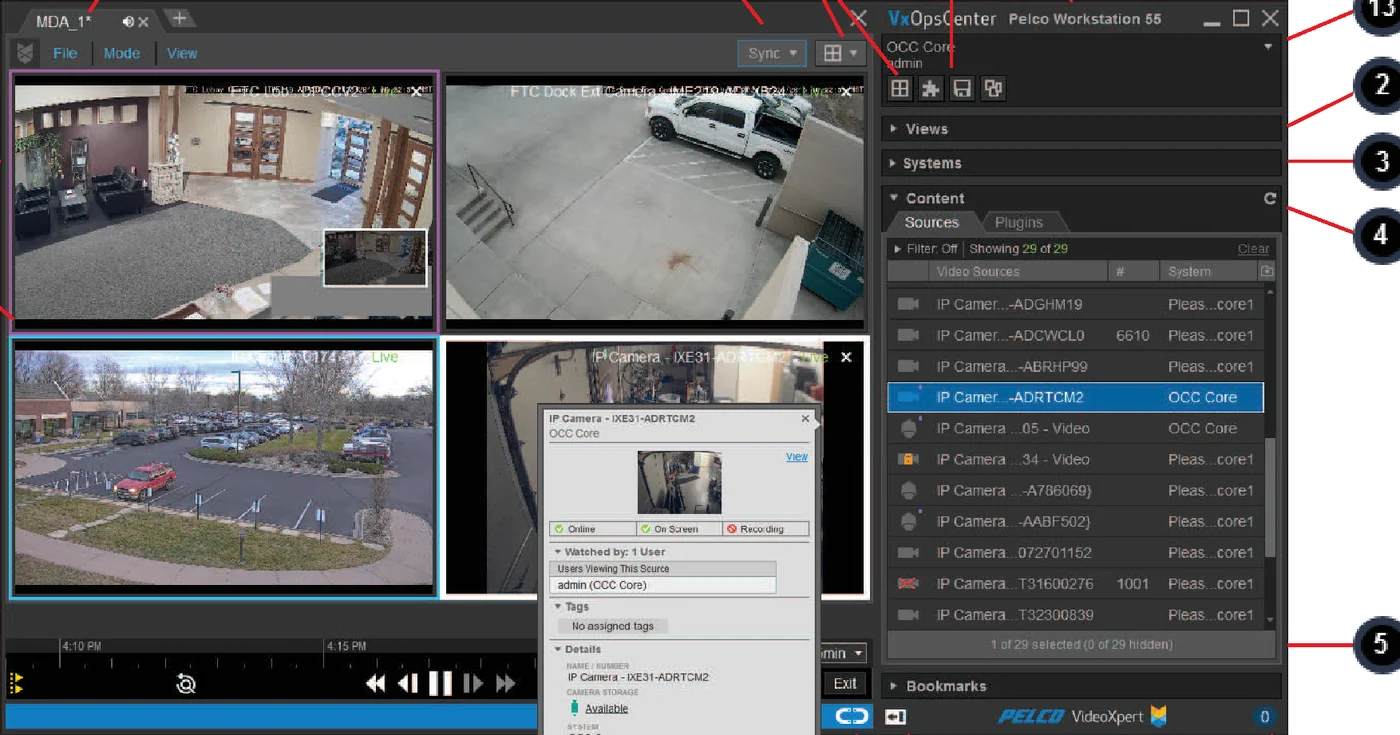
Fixed thermal IP network cameras, into your existing VMS
A thermal camera does not see light, it sees temperature. Every object radiates infrared
energy in proportion to how warm it is, and a thermal sensor turns those differences into an
image. A person crossing a cold yard at night is among the easiest things it can resolve,
because a human body is markedly warmer than the ground, the fence and the air.
Pelco are specific about what that buys you: detection of people and vehicles in complete
darkness, smoke, mist and similar conditions, for applications where situational awareness
and threat detection on a perimeter are the point. The practical consequence is that detection
stops depending on lighting. There is no need to floodlight a boundary, no blind period while
an illuminator warms up, no wash-out from oncoming headlights, and no dark gap between light
columns for someone to move through. On a long fence line that changes the cost of the
scheme as much as its performance.
These are fixed cameras rather than pan-tilt-zoom units, and for boundary work that is
deliberate. The field of view never moves, so the scene an operator sees is the same scene
every time and cannot be left pointing the wrong way. A constant frame is also what analytics
need: tripwire and intrusion-zone rules stay calibrated against an image that does not
change, which keeps false alarms down and makes the camera suitable for unattended,
alarm-driven monitoring.
What thermal does not do is identify. It will tell you reliably that a warm, person-sized
object has crossed a line; it will not give you a face or a licence plate. Nearly every
serious design therefore pairs the two - thermal detects and raises the alarm, and a visual
camera on the same scene provides the recognisable image needed to decide what to do.
Features
Detection without light. Heat-sensing, so performance does not depend
on scene lighting or perimeter floodlighting.
People and vehicles. The targets Pelco specify this technology
against.
Sees through obscurants. Holds a usable image in smoke and mist that
would defeat a visual-spectrum camera.
Fixed field of view. A scene that never moves, which is what keeps
analytics rules calibrated.
IP network camera. Records into the site VMS alongside the visual
cameras.
No illumination infrastructure. Removes the cost, power draw and
light-pollution objections of lighting a boundary for CCTV.
Pairs with visual. Thermal detects; a visual camera supplies the
identification.
Applications
Specified where detection has to be reliable regardless of light or weather.
Perimeter and boundary detection. Long, unlit fence lines where
lighting is impractical or unwanted.
Offshore platforms and FPSOs. Deck and overboard monitoring.
Ports and terminals. Quaysides and water approaches where sea mist is
routine.
Tank farms and process areas. Detection through process steam and
around unlit plant.
Airports. Airside boundaries and long stretches of unlit access
road.
Substations and unmanned compounds. Alarm-driven detection with nobody
on site.
On most sites thermal is not a replacement for the existing cameras but the layer that
makes unattended, alarm-driven monitoring workable.
Support & Documents
PT Vivo Asia Teknologi Indonesia supplies surveillance equipment as part of a designed
and commissioned system rather than as a boxed item. Our scope typically covers:
Site survey, camera placement and field-of-view study against your actual site.
System design, including transmission, power, recording capacity and mounting.
Supply, installation, termination and commissioning.
Integration with your VMS, access control and PAGA or alarm systems.
Analytics configuration and tuning to bring false alarms down to a workable level.
Operator and maintainer training, with ongoing maintenance and support.
Optical, electrical and approval details vary by variant and are confirmed against the
current manufacturer datasheet at quotation stage. Tell us the area to be covered, the
detection distance you need and the site conditions, and we will come back with the right
variant and a full bill of materials.
Use the enquiry button above for a datasheet, a specification or a project quotation.

 1 / 3
1 / 3